Hannover Hauptbahnhof, Central station in Mitte, Germany
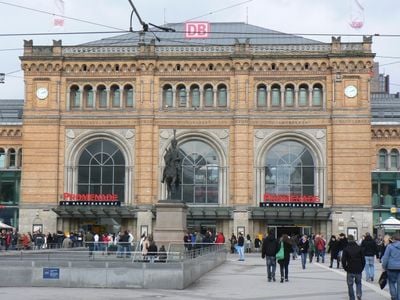
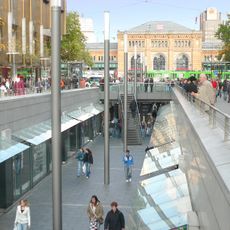
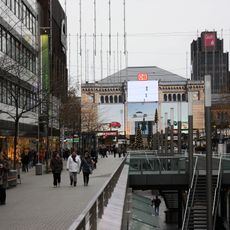
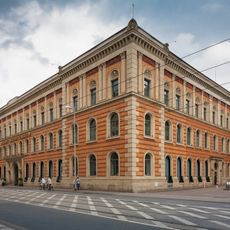
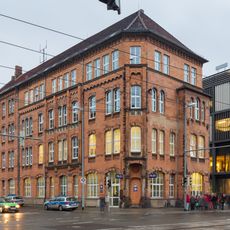
Hannover Hauptbahnhof is a central station in Mitte, Germany, extending 182 meters (597 feet) in length, 26.45 meters (87 feet) in width, and standing 13.5 meters (44 feet) tall. The facade features yellow brick walls with red stripes, and the building houses six platforms with twelve tracks serving regional, national, and international rail connections.
Operations began in 1843 with a temporary structure for the Lehrte line, before architect Hubert Stier completed the current building in 1879. Ahead of Expo 2000, the station underwent extensive renovations including an enlarged main tunnel and modern electronic interlocking systems.
The name refers to Hannover, the capital of Lower Saxony, while the Renaissance Revival architecture with yellow bricks and red stripes gives the building its character. Travelers from across Europe use this hub daily, and the historic facade now enjoys protected monument status.
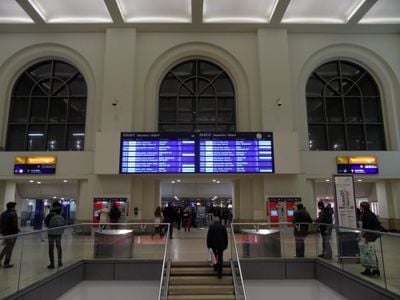
The station serves around 250,000 passengers daily and offers connections to destinations across the region, the country, and abroad. Signage guides travelers through the hall and to the platforms, which are accessible via elevators and stairs.
The building received the Station of the Year award in 2004 and remains valued for its successful combination of historic structure and modern infrastructure. Visitors often notice the high ceilings and large windows that bring light into the hall and create an open feeling.
The community of curious travelers
AroundUs brings together thousands of curated places, local tips, and hidden gems, enriched daily by 60,000 contributors worldwide.