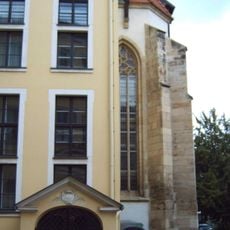
Bastion Cleve, Medieval defensive structure in Magdeburg, Germany.
Bastion Cleve is a defensive outpost at the southeastern corner of Magdeburg's fortifications, featuring medieval components and layered defensive walls. The structure displays typical fortification elements with solid masonry that has been partially restored and now defines the area around Fürstenwallpark.
The medieval Cleve tower was expanded in the 16th century and later absorbed into the baroque bastion. The Rondell Gebhart, built in 1536, was rebuilt from 1709 and strengthened as the Rondell Cleve. Between 1713 and 1725, under Governor Leopold I of Anhalt-Dessau, the detached Bastion Cleve was added to plans by Captain von Bosses and Gerhard Cornelius von Walrave. The fortress was decommissioned in 1912.
The name Bastion Cleve refers to its role as a defensive outpost protecting the city from the southeast. Today visitors can see how the preserved walls shaped the daily life and safety concerns of Magdeburg's residents.
Since the 2008 opening toward the Schleinufer, the area in front of the two-storey bastion and the gate of the Poterne can be reached from the Elbe side. The remains lie at the southern end of the Fürstenwall, above the left bank of the Elbe and southeast of Magdeburg Cathedral, with the Fürstenwallpark to the south.
Carl Robolsky opened Magdeburg's first photographic studio on the bastion in 1843. The site also preserves the medieval Turm Cleve, a round keep later absorbed into the baroque outwork.
The community of curious travelers
AroundUs brings together thousands of curated places, local tips, and hidden gems, enriched daily by 93,782 contributors worldwide.