Lichtenstein Cave, Natural monument and prehistoric cave in Osterode am Harz, Germany.
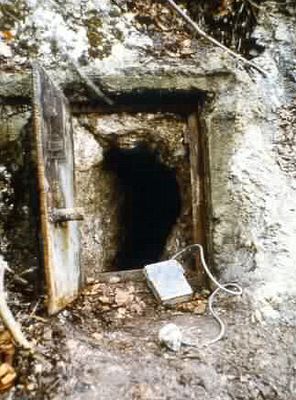
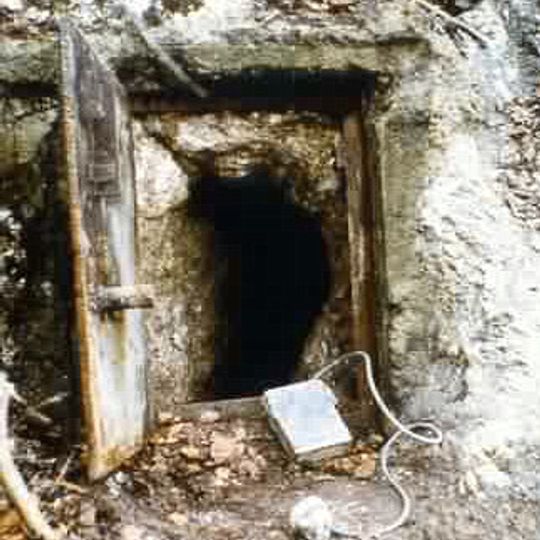
Lichtenstein Cave is a narrow gypsum karst cave about 135 m long in the Lichtenstein hill near Osterode, with winding passages only 30 cm wide in places and a volume of roughly 150 m³. Its small entrance lies on the steep north-northwest slope at about 156 m; the photograph shows a rectangular opening in pale layered rock, framed by dark weathered wood, with a grey-brown door hanging open on the left. Inside, the mouth is a black void.
Three Osterode amateur researchers found the cave in spring 1972 while searching for a secret passage beneath the former Lichtenstein castle; it was first called Rotkamphöhle. In 1980 cavers pushed through a sediment-blocked fissure and reached five chambers holding thousands of human and animal bones, bronze objects and Urnfield culture pottery. The cave was declared a natural monument in 1974.
The cave's original name, Rotkamphöhle, was changed to Lichtensteinhöhle after the hill above it. The bones belong to the Urnfield Culture, whose usual rite was cremation; this site is one of the few with unburnt remains. A 13-metre replica section in the Iberger Tropfsteinhöhle visitor centre can be walked and partly crawled through.
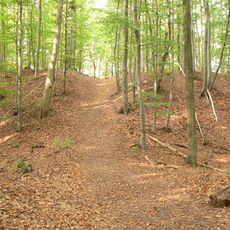
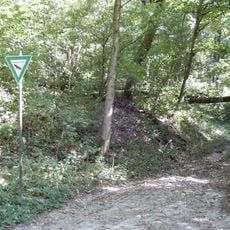
The cave is closed to the public; the small entrance lies in woodland on the lower north-northwest slope of the Lichtenstein hill, about 156 m above sea level. A 13-metre section can be walked and partly crawled through in a replica at the Iberger Tropfsteinhöhle cave centre near Bad Grund, roughly 11 km to the north-northeast.
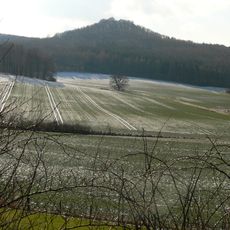
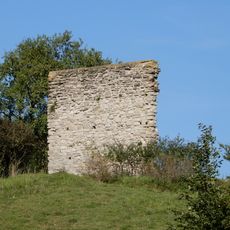
The cave lies at about 156 m on the steep north-northwest slope of the Lichtenstein hill, below the ruins of Lichtenstein Castle. Its entrance is small and was sealed with a door by its discoverers on 21 March 1973; youths broke it open on 10 October 1974, and it was renewed afterwards.
The community of curious travelers
AroundUs brings together thousands of curated places, local tips, and hidden gems, enriched daily by 94,638 contributors worldwide.