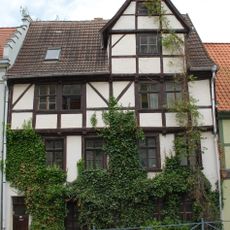
Domschatz Quedlinburg, Church treasury in Quedlinburg, Germany
The Domschatz is a museum housing a collection of medieval artworks crafted from gold, silver, ivory, and crystal, adorned with gemstones and intricate detailing. The exhibition displays over fifty precious objects that document the craftsmanship of the Middle Ages.
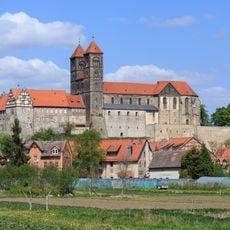
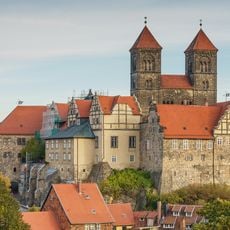
The treasury grew from the collegiate foundation of St. Servatius, established in 936 by Otto I in memory of his father Henry I. The Liudolfing and Ottonian houses enriched it with gifts, and it remained a Lutheran church after the Reformation. In 1943 the pieces were moved to a mine near Quedlinburg; in 1945 Lieutenant Joe Tom Meador stole twelve objects, of which ten returned in 1992 and two are still missing.
The treasure is tied to the memoria of the Ottonian dynasty: the convent founded in 936 by Otto I for his father Henry I kept the family's memory, and most pieces came as gifts from the Liudolfing rulers. The Servatius reliquary's ivory box, made around 870 at the court of Charles the Bald, shows Christ with eleven apostles under arcades, with zodiac signs above.
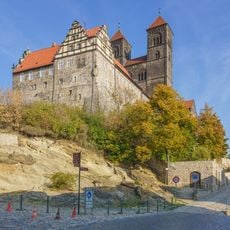
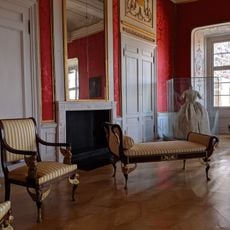
The treasure is shown in two rooms of St. Servatius: the northern Zither, built around 1160, and a southern chamber set up in 1972. The Zither is small, so the 1972 room holds most pieces. The church stands on the castle hill above the town center; the display rooms are not step-free.
The treasure includes fragments of the Quedlinburg knotted carpet, made around 1200 on the commission of Abbess Agnes II of Meissen; these fragments are shown not in the church but in the former convent building. The carpet is a German work, not an import from Persia.
The community of curious travelers
AroundUs brings together thousands of curated places, local tips, and hidden gems, enriched daily by 94,241 contributors worldwide.