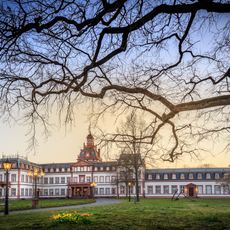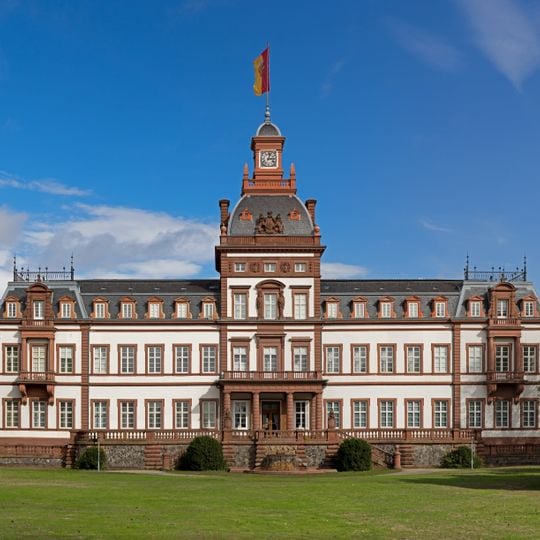
Schloss Philippsruhe, Baroque château in Hanau, Germany
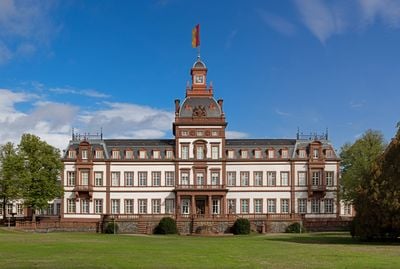
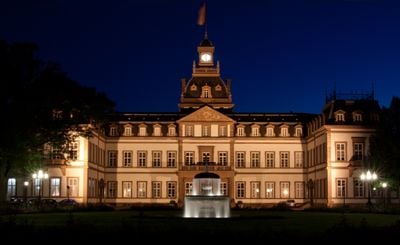
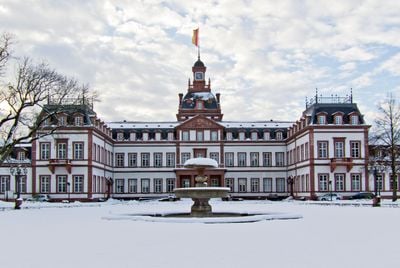
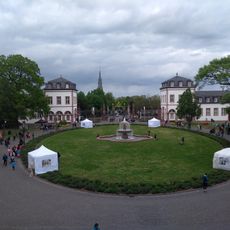
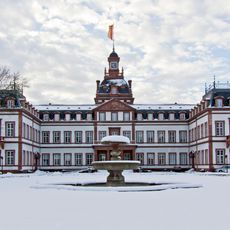
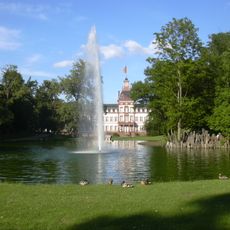
Schloss Philippsruhe is a Baroque palace begun in 1701 west of Hanau, built for Count Philipp Reinhard on plans by Julius Ludwig Rothweil, modelled on the French château of Clagny. Its present look comes from the 1875–1880 rebuilding for Landgrave Friedrich Wilhelm: a central section pushed forward three window bays, a columned portico and a clock tower. The 1984 fire destroyed the dome; the roof was rebuilt with its historic curved shape.
Count Philipp Reinhard commissioned the palace's construction between 1700 and 1725, replacing an earlier Renaissance building that had been destroyed during the Thirty Years War. This transition marked the shift from an older structure to a new Baroque design.
The Bel Etage rooms, now the Historical Museum Hanau, keep the historicist wood inlays and stucco of Landgrave Friedrich Wilhelm and his wife Maria Anna of Prussia. The Red Hall ceiling fresco is by Wilhelm Keuffel, and a painting by Johann Heinrich Tischbein the Elder shows Landgrave Friedrich II in full regalia. The Heron Hall, with stucco herons, is used by the city for civil wedding ceremonies.
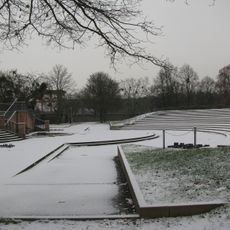
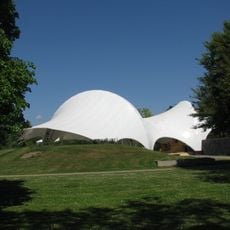
The palace offers multiple spaces to explore, including museum galleries, a restaurant in the vaulted basement, and an outdoor amphitheater for performances. It helps to check ahead for current exhibitions or events to make the most of a visit.
The palace's White Hall, the only room surviving from the classicist phase, has eight Corinthian columns and white stucco with acanthus and egg-and-dart motifs; it was fully renovated in 2016/2017 and can be rented for events. The Heron Hall, named for its stucco herons, hosted the weddings of two landgrave children in 1884 and 1893 and is now Hanau's civil wedding room.
The community of curious travelers
AroundUs brings together thousands of curated places, local tips, and hidden gems, enriched daily by 93,000 contributors worldwide.