Burg Ruck, castle
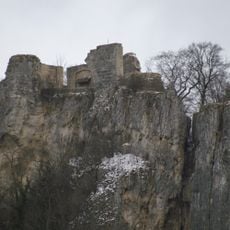
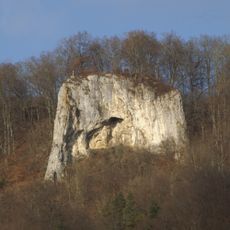
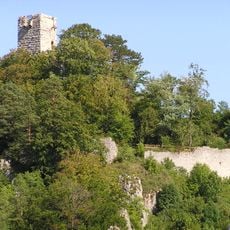
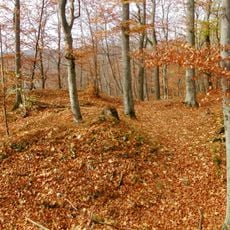
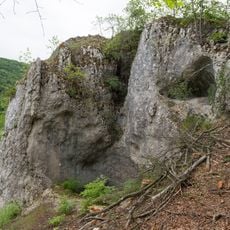
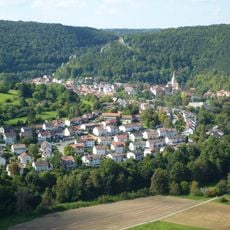
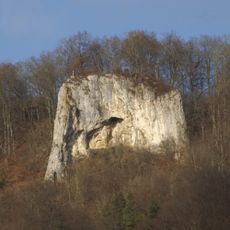
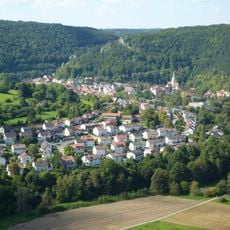
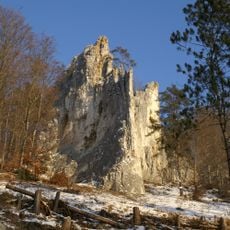
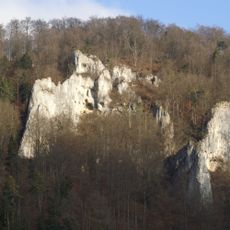
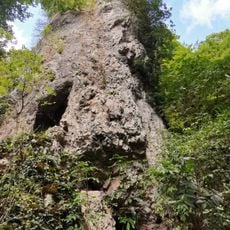
Burg Ruck, also written Burg Rugge, is the ruin of a rock castle on the 524 m high Bismarckfelsen near Blaubeuren in the Alb-Donau district. Only small remains of the wall survive; the site lies on a rocky outcrop above the town.
Burg Ruck was built in the 11th century by Sigibot, a count of Tübingen. It later passed to princely ministerials and the Counts of Helfenstein, and was the ancestral seat of the Minnesänger Heinrich von Rugge, who died in 1200. In 1563 it was enlarged into a residential castle; after the Thirty Years' War it decayed and was demolished from 1751, leaving only scant wall remains.
The castle was the ancestral seat of the Minnesänger Heinrich von Rugge, who died in 1200. A side line of the Counts of Palatine of Tübingen named itself after Burg Ruck, as did Manegold, founder of Anhausen Abbey on the Brenz. The name is also written Burg Rugge.
The site has no modern facilities, so visitors should wear sturdy footwear and bring water. The terrain is uneven and rocky, making a visit during dry weather advisable to navigate the paths safely. Plan for one to two hours to explore the ruins and surrounding landscape at a comfortable pace.
The castle stands on the 524-metre Bismarckfelsen, a rock named after Otto von Bismarck. It was also the ancestral seat of the Minnesinger Heinrich von Rugge, who died in 1200. Only scant remains of the walls survive today.
The community of curious travelers
AroundUs brings together thousands of curated places, local tips, and hidden gems, enriched daily by 94,191 contributors worldwide.