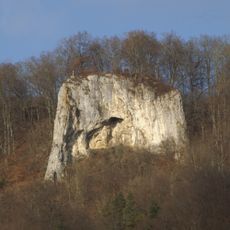
Brillenhöhle, Stone Age cave site near Blaubeuren, Germany.
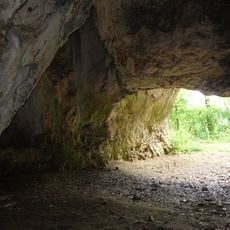
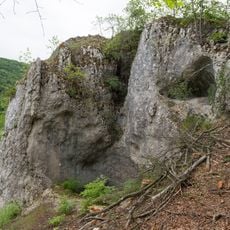
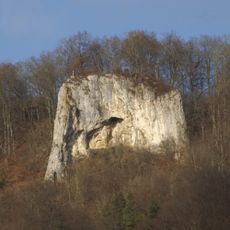
The Brillenhöhle is a cave near Blaubeuren with a spacious main chamber and two round ceiling openings that let light filter through. The interior contains multiple layers from different prehistoric periods, documenting thousands of years of human habitation and use.
The cave was used by people from three major prehistoric periods spread far apart in time. Excavations conducted in the mid-20th century uncovered the stacked layers containing tools and bones from each era.
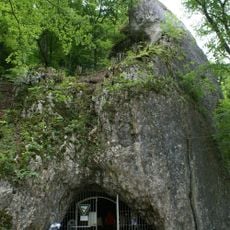
The name comes from two ceiling openings, a round southern window 2.5 m across and an oval northern one 3.4 m long, that resemble a pair of spectacles; the cave was formerly called Zwickerhöhle. The openings formed when part of the roof collapsed about 30,000 years ago. In the Gravettian layer, excavators found remains of two dry-stone walls, called Steingehäuse, piled up as foundations for roofs of animal hides that shrank the heated space.
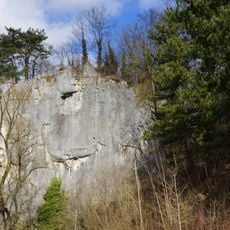
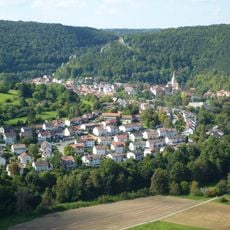
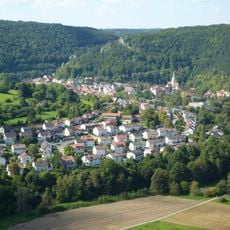
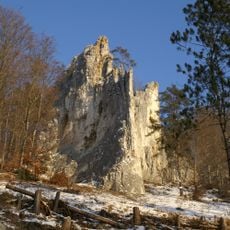
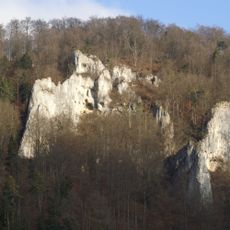
The cave lies on the northern slope of the Ach Valley, about 60 m above the valley floor at roughly 600 m elevation, reached by a partly unpaved hiking trail. The entrance is sealed by an armoured lattice gate to protect unexcavated areas, so the interior cannot be entered; the gate still allows a view inside.
Human bones from the cave display cut marks that differ distinctly from those on animal bones, pointing to special burial practices. These differences shed light on rituals and actions that these early people performed for their deceased.
The community of curious travelers
AroundUs brings together thousands of curated places, local tips, and hidden gems, enriched daily by 94,254 contributors worldwide.