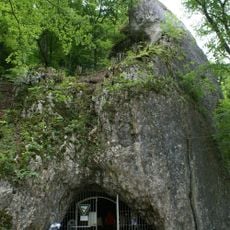
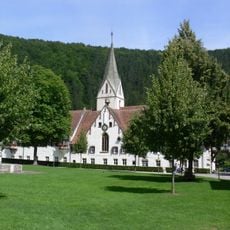
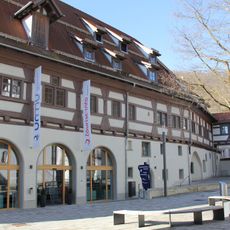
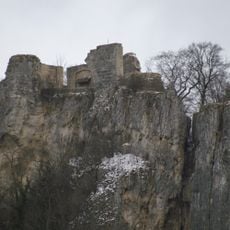
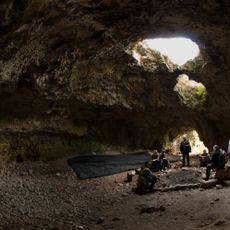
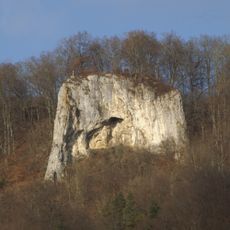
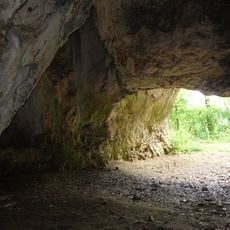
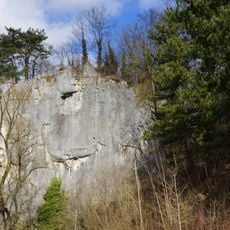
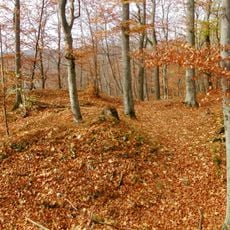
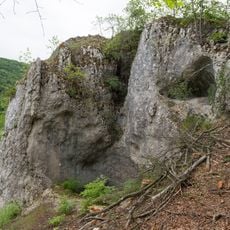
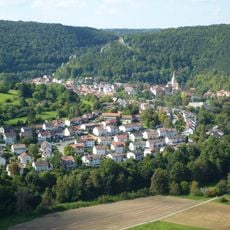
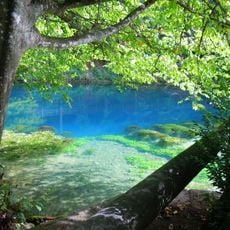
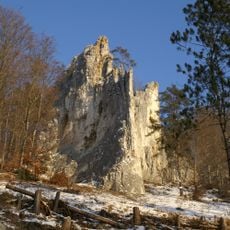
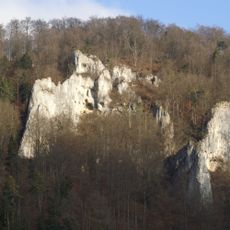
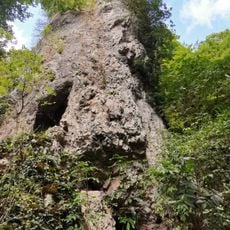
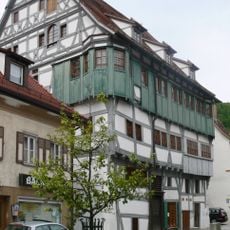
Blauhöhle, Cave entrance in Blaubeuren, Germany
Blauhöhle is an underground cave system in Blaubeuren that runs through multiple levels of limestone beneath the Swabian Alps. The three floors of the system connect through narrow passages and wide chambers that can only be reached underwater.
After unsuccessful dives from the 19th century onward, the Göppingen-Eschenbach caving group under Manfred Keller discovered the cave in the 1960s. Jochen Hasenmayer drove exploration forward and reached the Mörikedom, the first large air-filled chamber, in 1985. A diving accident in the Wolfgangsee in 1989 left him paralysed; from the 1990s he returned in the Speleonaut submersible built with organ builder Konrad Gehringer. The Arbeitsgemeinschaft Blautopf, founded in 1997, found the Wolkenschloss and in 2005 the Landweg.
The large air-filled chambers carry names given by the divers who found them: the Mörikedom, discovered in 1985 by Jochen Hasenmayer, honours the poet Eduard Mörike, who was born in Ludwigsburg and lived in Cleversulzbach. Later chambers were named Wolkenschloss, Mittelschiff, Äonendom and Apokalypse. The Arbeitsgemeinschaft Blautopf, founded in 1997 by cave divers from several regional clubs, has measured the passages and continues the exploration.
Access requires diving equipment and experience with cave diving as the passages lie underwater and are sometimes very narrow. Thorough preparation and guidance from experienced divers are necessary to navigate safely through the system.
One of the largest rooms in the system is called Apokalypse and measures roughly 170 meters in length. The ceiling of this chamber reaches up to 50 meters in height and forms one of the largest known underground voids in the region.
The community of curious travelers
AroundUs brings together thousands of curated places, local tips, and hidden gems, enriched daily by 94,257 contributors worldwide.