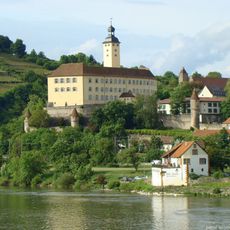
Burg Ehrenberg, Medieval castle in Heinsheim, Germany
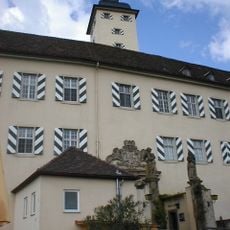
Burg Ehrenberg is a ruined hill castle above Heinsheim on the Neckar, opposite Gundelsheim. Its oldest element is a ring wall about two metres thick around the core castle, whose buildings date from the 12th and 13th centuries. The 50-metre bergfried was built in 1235, and a 15-metre gable of a core-castle building survives. The bailey below, with a 30-metre gate tower, was added in the 17th and 18th centuries.
Burg Ehrenberg was begun in the early 12th century, attributed to the Counts of Lauffen, though some sources consider a construction before 1220 implausible. From at least 1193 it was held by the Lords of Ehrenberg, ministerials of the Staufers, and is often seen as an outer defence for the imperial palace at Wimpfen. The core castle was damaged in the Thirty Years' War and then abandoned; the family died out in the 17th century and the estate passed to the Bishops of Worms, then to Hesse in 1803 and to the Freiherren von Racknitz in 1805.
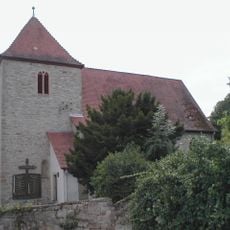
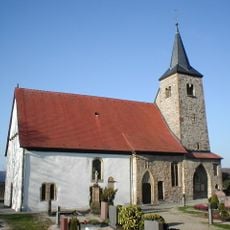
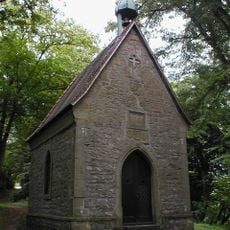
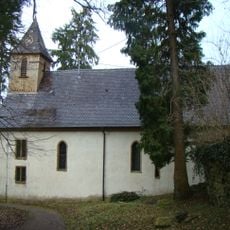
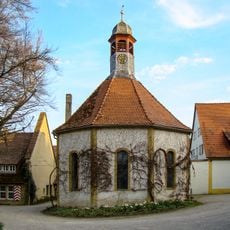
The castle gave its name to a Heinsheim vineyard (Einzellage) within the Baden wine region. The chapel of St. Alban, built in 1602 south of the ring wall as the village's Catholic church, was remodelled in Baroque style in 1778.
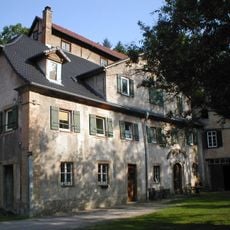
The castle is privately owned and inhabited, so it cannot be visited; only the exterior can be seen. The core castle ruin serves as a breeding station for birds of prey, and the lower castle is lived in by the Racknitz family. Access is limited to viewing from outside.
The 50-metre bergfried, built in 1235, was once about 10 metres taller. Its unusual size and position outside the core castle have led some to date it to the 10th century, when Heinsheim was founded.
The community of curious travelers
AroundUs brings together thousands of curated places, local tips, and hidden gems, enriched daily by 93,583 contributors worldwide.