Dampfmaschinenhaus, Pumping station in Potsdam, Germany
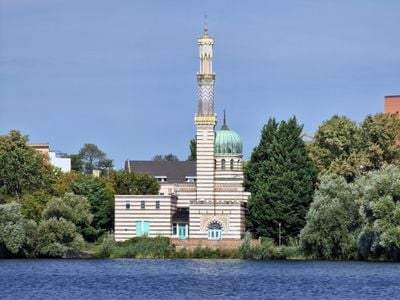
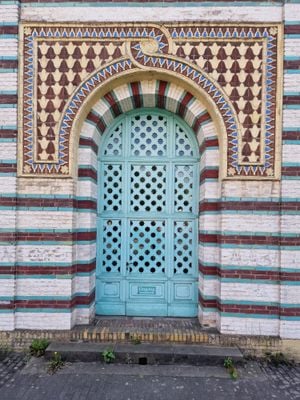
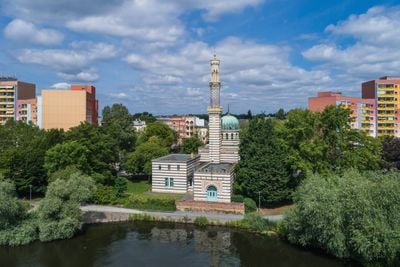
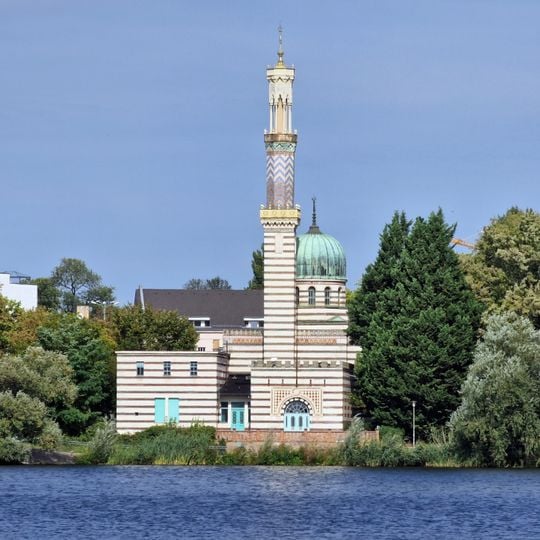
The Dampfmaschinenhaus stands on the Neustädter Havelbucht in Potsdam, built 1841–1843 under Ludwig Persius to drive the Great Fountain at Sanssouci. Its cream and reddish-brown banded walls carry a square tower topped by a tiered minaret with blue, green and gold tile patterns, and a green copper dome with a spire. The central arched entrance has blue doors and a fanlight.
Frederick William IV ordered the building erected in 1841–1843 under Ludwig Persius, with Carl von Diebitsch involved in the design. Its Borsig two-cylinder steam engine of 1842 burned four tonnes of Silesian coal daily, lifting Havel water through 1.8 km of pipes to the Ruinenberg reservoir. From there the Great Fountain before Sanssouci rose 38 m, a record for its time.
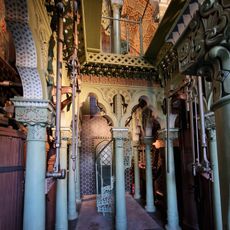
The building merges industrial purpose with oriental design elements that reflect how 19th-century Germans were drawn to eastern architectural forms. Visitors can observe how practical function and artistic style were combined in a single structure.
The building sits directly on the Havel riverside and is easily visible from multiple viewpoints along the riverbank. Visitors should allow time to walk around the riverside area to see the structure from different angles and appreciate its brick detailing.
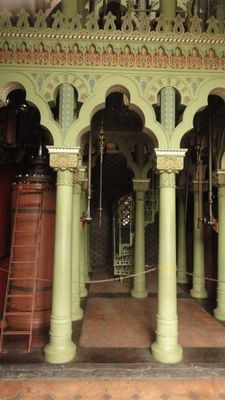
The original 1842 Borsig two-cylinder steam engine survives inside and is set in motion by an electric motor during opening hours. It was the most powerful engine of its kind in Germany, driving water through 1.8 km of pressure pipes to the Ruinenberg reservoir.
The community of curious travelers
AroundUs brings together thousands of curated places, local tips, and hidden gems, enriched daily by 93,909 contributors worldwide.