Burg Mark, Medieval castle ruins in Hamm, Germany
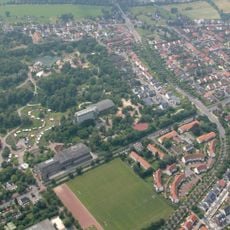
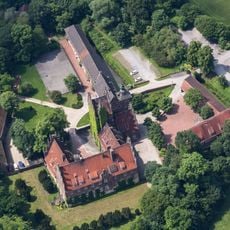
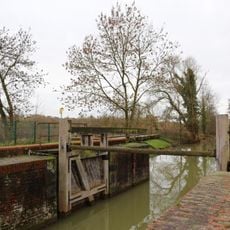
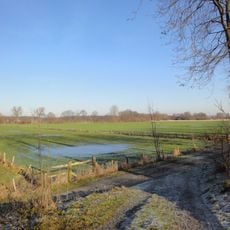
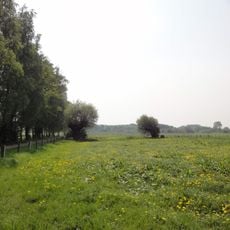
Burg Mark is a medieval castle site in the Uentrop district of Hamm, Germany. It consists of a tall earthen mound, known as a motte, surrounded by outer earthworks and water-filled ditches that still define the layout of the site.
The site was probably a farmstead with a moat before Frederick of Berg-Altena acquired the Oberhof Mark between 1170 and 1198. His son Adolf I took the title Count of the Mark and probably built the castle around 1200. It was first mentioned as castrum in 1256 and 1265, and remained the counts' seat until 1391. Demolition for building material began in 1772.
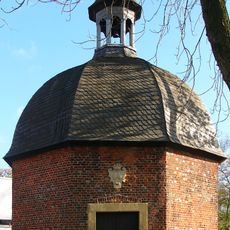
The name Mark comes from the counts who took their title from this castle; Adolf I was the first to call himself comes de Marca. The castle's chapel, built in the bailey in the mid-15th century, served the counts' household. The site now lies in a park and is a popular walking destination.
The site is open to visitors on foot and information panels are placed throughout to help make sense of the remains. Dry weather makes it much easier to walk around the earthworks and get a clear view of the ditches.
The castle was demolished from 1772 to provide building material for barracks in Hamm, which destroyed most archaeological traces. On the circular main island, about 60 metres across, the outline of the former residential tower, roughly 18 by 10 metres, has been exposed for visitors.
The community of curious travelers
AroundUs brings together thousands of curated places, local tips, and hidden gems, enriched daily by 93,972 contributors worldwide.