Burgruine Schönstein, Medieval castle ruin in Schönau, Gilserberg, Germany.
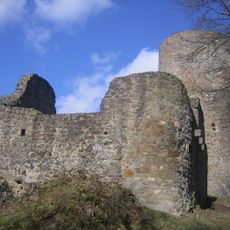
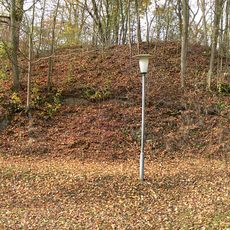
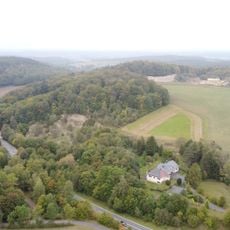
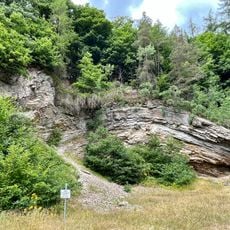
Burgruine Schönstein is the ruin of a Romanesque spur castle on a 20 by 36 metre rectangular plateau on the west spur of the 419 m Schloßberg above the Gilsa valley. The three-storey palas measured 20 m by 9 m; its walls, with windows and fireplace, are the best preserved part. A bergfried was destroyed twice and never rebuilt after 1399. The masonry uses local greywacke.
Probably built by the Counts of Ziegenhain in the 12th century, the castle guarded the road through the Gilsa valley and was first documented in 1350, when Count Johann I established an office there. Hessian troops took and destroyed it in 1371/72 and again in 1399, after which it was rebuilt without its bergfried. In 1469 Bohemian mercenaries destroyed it for good; it remained the seat of Hessian bailiffs until 1543.
The name Schönstein comes from the nearby village of the same name, 1.4 km north. Court days were held at the castle until its destruction, and the Amt Schönstein administered 14 places in the Gilserberg highlands. In 1601 residents of Schönau swore to Landgrave Moritz that stones from the ruin had gone into the Ziegenhain fortress, not their own houses.
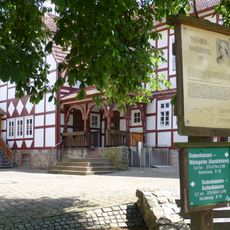
The ruins are reachable from Gilserberg via marked hiking trails and can be visited free of charge throughout the year. The path to the hilltop is well signposted and offers a short walk with easy to moderate conditions.
The castle had no surviving bergfried: the main tower was destroyed twice in sieges and was never rebuilt after 1399. The three-storey palas measured 20 by 9 metres, and its walls, with windows and a fireplace, are the best-preserved remains. The stone used was local greywacke.
The community of curious travelers
AroundUs brings together thousands of curated places, local tips, and hidden gems, enriched daily by 93,850 contributors worldwide.