Burg Montclair, Medieval castle ruins in Mettlach, Germany.
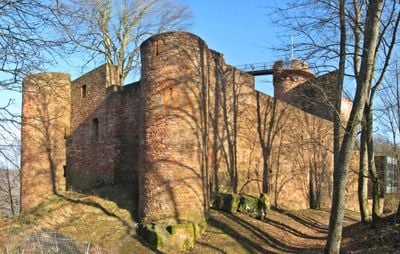
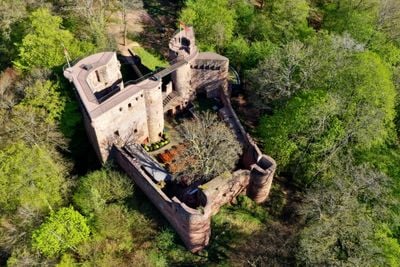
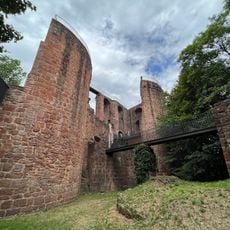
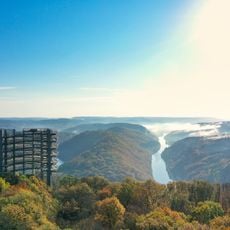
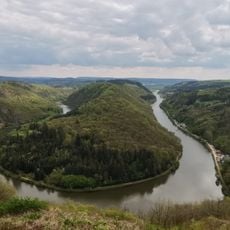
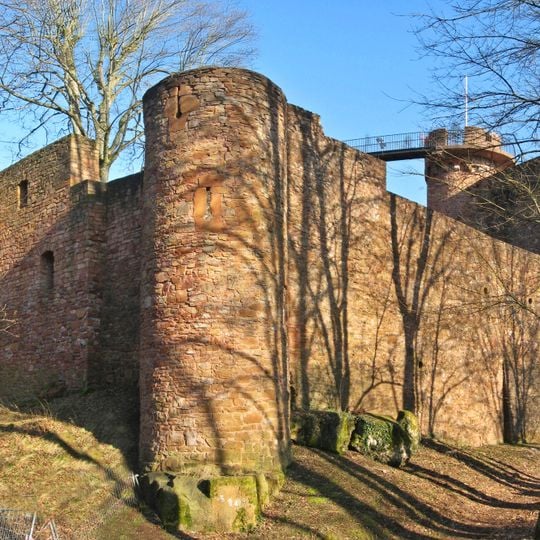
Burg Montclair is a medieval castle ruin set on a ridge above a meander of the Saar river near Mettlach, Germany. Stone walls and foundations from several building phases remain standing, showing how the structure grew and changed over time.
A Celtic rampart stood two kilometres east of the later castle, and Roman traces remain on the sun-facing slope. In the 9th century an Ardennes noble family built the tower-mound castle Skiva here; Archbishop Poppo of Trier took and destroyed it in 1016. Around 1169-1183 Archbishop Arnold I of Trier settled a dispute with Arnulf von Walecourt by permitting a new castle near the old ruin, the one Arnulf called himself de Monclir after 1195. This Alt-Montclair, nearly 900 metres long, was razed in 1351.
The name derives from Latin mons clarus, "bright mountain", rendered in German dialect as "Munzlar"; Augustin Calmet wrote it as Mont-Cler and Mont-Clair in the 18th century. Arnulf von Walecourt, who received the site as a fief around 1169–1183, called himself "Arnold de Monclir" from 1195. The castle controlled traffic on the lower Saar.
A forest path leads up to the ruins and takes about 20 minutes on foot from the base, so sturdy shoes are a good idea. The ground around the remains is uneven, and some sections require care when walking.
The 1778 convention between France and the Elector of Trier confirmed what had been agreed in 1661: the fort and castle of Montclair were never to be rebuilt or restored. The ruin has therefore stood untouched by construction since the 18th century, and the treaty is why no reconstruction was ever attempted.
The community of curious travelers
AroundUs brings together thousands of curated places, local tips, and hidden gems, enriched daily by 92,773 contributors worldwide.