Burg Neuenberg, Medieval castle ruins in Lindlar, Germany
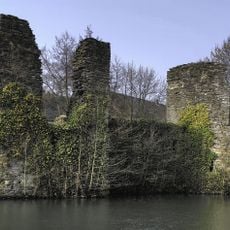
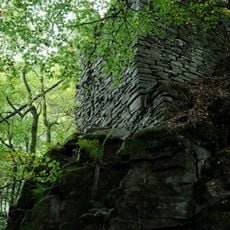
Burg Neuenberg is a castle ruin featuring a hexagonal main fortification surrounded by an outer courtyard with two round towers about 8 meters (26 feet) tall. The remains reveal the original layout of a medieval defensive stronghold from the Berg region.
Architectural remains point to a 12th-century origin, and the castle was first documented in 1433 as a possession of the Counts of Berg. In 1273 the pledge of the Gummersbach bailiwick to the Counts of Mark made the Leppe the border, turning Neuenberg into a frontier fortress. Swedish troops took and destroyed it around 1640 during the Thirty Years' War, and it was razed around 1662.
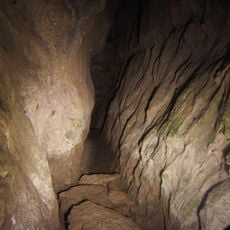
The castle's name, Neuenberg or Neuenburg, means "new mountain" or "new castle", reflecting its medieval founding. As a border fortress between Berg and Mark after 1273, it marked the Leppe river as a territorial boundary. Today, the nearby Zwergenloch cave, whose name means "dwarf hole", adds a local legend to the site.
Burg Neuenberg lies at 250 m above sea level near the hamlet of Scheel in the municipality of Lindlar. A short footpath from the ruins leads to the Zwergenloch cave, 12 m long and 7 m wide. The site is reached on foot; the surviving outer walls, gateway and moat stand on open ground.
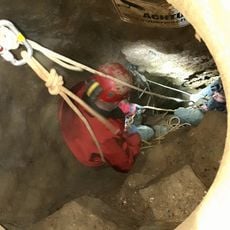
A short footpath from the ruins leads to the Zwergenloch, a limestone cave with stalactites that is 12 metres long and 7 metres wide. Visitors often mistake its length for its width, since the entrance gives no hint of the passage behind it.
The community of curious travelers
AroundUs brings together thousands of curated places, local tips, and hidden gems, enriched daily by 92,841 contributors worldwide.