Aggertalhöhle, Show cave in Engelskirchen, Germany
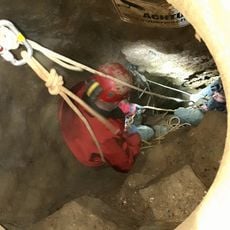
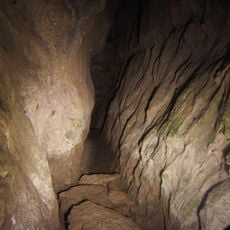
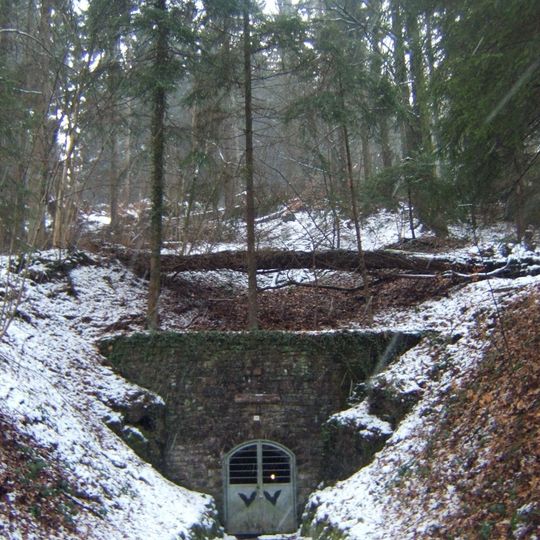
Aggertalhöhle is a show cave near Ründeroth in Engelskirchen, entered through a horizontal tunnel drilled in 1890. Its passages run 1,071 metres through Middle Devonian limestone, with a maximum height difference of 31 metres; guided tours cover about 270 metres and 10 metres of height. Clay shale above the cave limits stalactites, but fossils and bundles of aragonite crystal needles are visible on the walls.
A report from 1773 claims the cave was first entered then, and a 1819 record of the Bonn mining office mentions a "Feckelsberger Höhle" found during mining, possibly this cave. In 1890 a 30-metre horizontal tunnel was bored into the cave, which was then called Guilleaume-Höhle after the Cologne industrialist Theodor Guilleaume. From 1927 to 1930 the Verschönerungsverein Ründeroth prepared it for regular guided tours.
The cave owes its name to the Agger river, in whose side valley it lies. From 1927 to 1930 the Verschönerungsverein Ründeroth prepared it for regular visits, after the owner leased it to the association free of charge for guided tours. Earlier, around 1920, the industrialist Otto Wolff had the decayed 1890 tunnel renewed and held occasional tours and festivities, at first lit with pitch torches.
The cave holds a steady 6 to 8 °C all year, so warm clothing helps. Guided tours cover about 270 metres of the 1,071-metre cave, with a height difference of 10 metres; the entrance is off the L 307 near Ründeroth.
The cave's walls hold bundles of small aragonite crystal needles, remains of corals built from magnesium-rich lime. Because clay shale above the cave keeps most lime-bearing water out, stalactites are scarce, while Devonian fossils and water-erosion traces stay clearly visible.
The community of curious travelers
AroundUs brings together thousands of curated places, local tips, and hidden gems, enriched daily by 94,505 contributors worldwide.