Burg Istein, Medieval castle ruins in Efringen-Kirchen, Germany
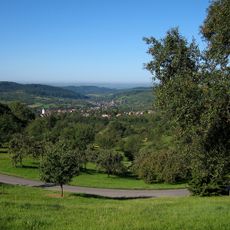
Burg Istein comprises stone ruins of a medieval fortress on a rocky hilltop near Efringen-Kirchen, commanding views across the Rhine Valley and surrounding Baden-Württemberg landscape. The remaining structures show the typical layout of a castle with chapel, residential areas, and defensive walls.
Burg Istein was built by the Bishops of Basel in the 11th–12th century and first mentioned in 1185 as castrum Istein, again around 1233. Basel troops razed it in 1410–1411; it was rebuilt in the mid-15th century as an administrative centre and later pledged to owners including Jakob von Waldkron, Werner Schaler, the city of Basel, Austria, the Münch von Landskron family, the Counts of Freiburg and the Margraves of Sausenberg. Rebuilt as a fortress in 1900–1914 and absorbed into the Westwall from 1936, it was blown up after 1945.
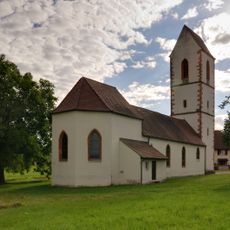
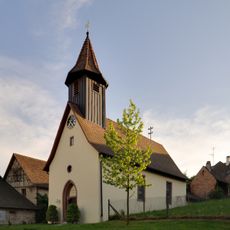
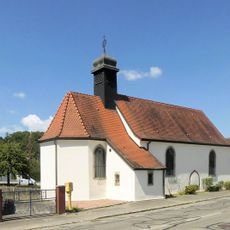
The St. Veit chapel, built between 1100 and 1200, was one of two castle chapels. After the castle was destroyed in 1650, locals rebuilt it and services were held there for about 300 years. It lay in ruins after 1945 and was largely rebuilt in the 1980s.
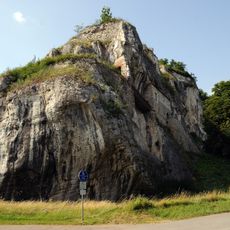
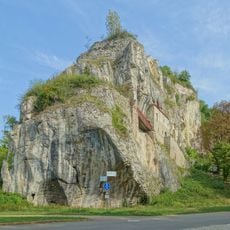
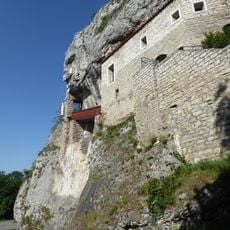
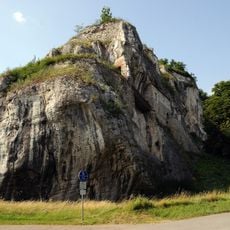
The ruins stand on the Isteiner Klotz, a rock spur on the right bank of the Rhine above the village of Istein. The St. Veit chapel, rebuilt in the 1980s, sits in a niche in the steep rock face and is visible from far off. Remains of the castle walls are sparse, so the chapel is the main structure to look for.
The St. Veit chapel, built between 1100 and 1200, was one of two castle chapels; its ruins remain visible from afar in a niche on the steep rock face. Rebuilt after the castle's destruction in 1650, it lay in rubble after the 1945 demolition and was largely reconstructed in the 1980s.
The community of curious travelers
AroundUs brings together thousands of curated places, local tips, and hidden gems, enriched daily by 92,812 contributors worldwide.