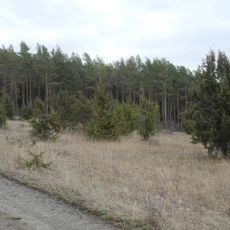
Burgruine Großer Gudenberg, Medieval castle ruin in Zierenberg, Germany.
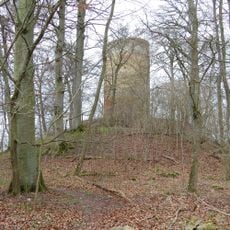
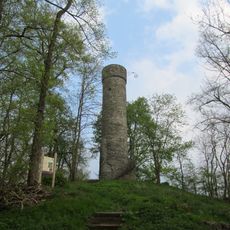
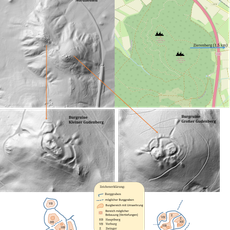
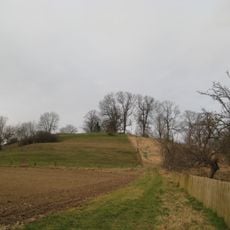
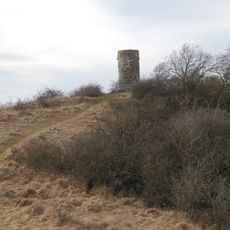
Burgruine Großer Gudenberg is a castle ruin in Zierenberg consisting of two separate fortified areas surrounded by an oval rampart. One section displays rectangular walls while the other shows circular foundations.
The castle was first documented in 1209, though it was likely built under the Hessian count Werner IV. It was a fief of Mainz held by the Groppe von Gudenberg and Wolff von Gudenberg families. Troops of Landgrave Heinrich I of Hesse probably destroyed it between 1269 and 1272 during his conflict with Archbishop Werner von Eppstein of Mainz; raubritter activities by the owners may also have been a cause. The Groppe line died out in 1398, while the Wolff von Gudenberg family still exists.
The name Gudenberg comes from two ministerialis families, the Groppe and the Wolff von Gudenberg, who held the castle as a Mainz fief. The Groppe line died out in 1398, while the Wolff von Gudenberg family still exists today. The nearby Kleiner Gudenberg ruin belonged to the Herren von Gudenberg, and whether the families were related or simply co-owners remains unclear.
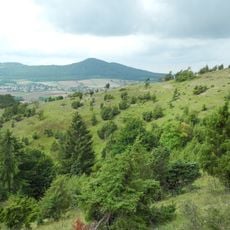
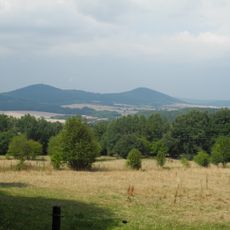
The ruin is freely accessible, but only via partly steep paths and trails climbing the Großer Gudenberg; there are no marked routes to the summit. The site lies in the northern Habichtswald nature park, about 2 km west of Zierenberg's centre. The two castle areas are separated by a neck ditch running northwest to southeast.
The two castles were separated by a neck ditch running northwest to southeast, and both were enclosed by a single shared oval rampart set further out to the northeast. The northeastern, almost rectangular castle was the larger and once showed remains of a probable bergfried and the walls of a palas; the southeastern, almost circular castle has no visible remains above ground.
The community of curious travelers
AroundUs brings together thousands of curated places, local tips, and hidden gems, enriched daily by 94,082 contributors worldwide.