Burg Tierberg, Medieval castle in Braunsbach, Germany
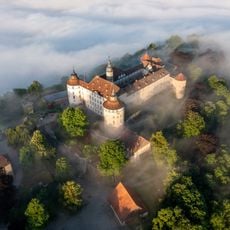
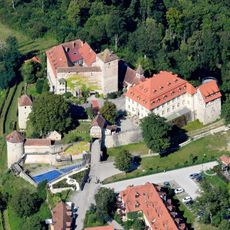
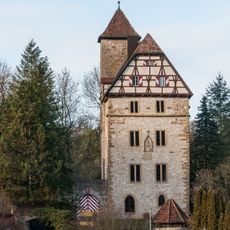
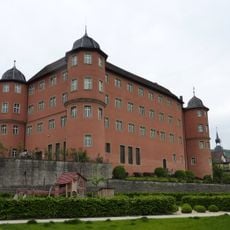
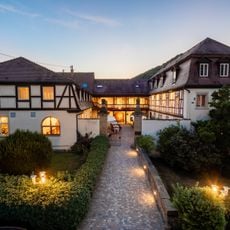
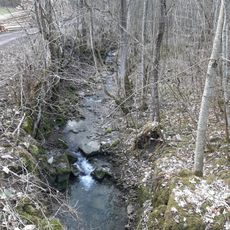
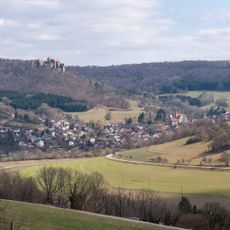
Burg Tierberg sits on a pointed ridge between two tributary valleys of the Kocher river, with a trapezoidal ground plan, defensive walls, and a square keep at its core. The stone structure maintains its medieval form and occupies a strategic position overlooking the valleys below.
In 1220 the free lords of Langenburg had their ministerialis Arnold von Tierbach build the castle to secure or control two nearby long-distance trade routes; he named himself after it and appears as Arnold von Tierberg in a 1226 charter. Between 1232 and 1235 Langenburg passed to the Hohenlohe, making the Tierberg knights Hohenlohe vassals. In 1300 the Hall patrician family Feldner owned it, and in 1374 it came to Hohenlohe-Langenburg. In 1387 Ulrich von Hohenlohe sold castle and lordship cheaply to two lords of Stetten; a family suit followed, settled in 1402 by a new purchase contract granting the Hohenlohe a right of repurchase.
The castle's name lives on in the Tierberger Fehde, a 1475–1495 feud between the Hohenlohe and Stetten families over its repurchase. The dispute escalated into a constitutional conflict between emperor and imperial princes and is considered a co-trigger of the Reichsreform. The castle later served as a hunting lodge for the Hohenlohe-Langenburg family.
The castle remains in private ownership, so visitors can observe the exterior walls and peek through the main gate into the outer bailey area. The hillside paths surrounding the ridge offer good vantage points for viewing the structure from different angles.
During World War II and immediately after, sections of the castle functioned as a storage facility for the University of Berlin's book collection. This unexpected role helped preserve valuable scholarly materials away from the destruction in the city.
The community of curious travelers
AroundUs brings together thousands of curated places, local tips, and hidden gems, enriched daily by 93,612 contributors worldwide.