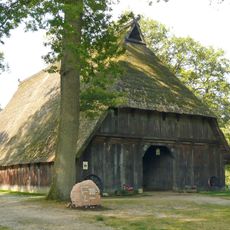
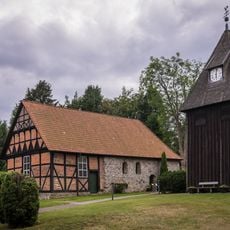
Dat ole Huus, Farmhouse museum in Wilsede, Germany
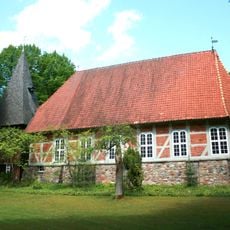
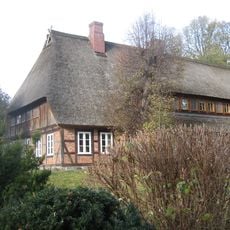
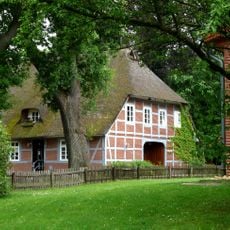
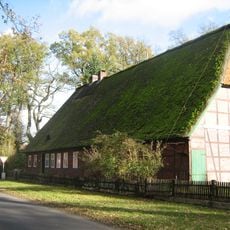
Dat ole Huus is a Low German hall house built in 1742, moved from Hanstedt to Wilsede in 1907. Its central Flett, a full-width living and cooking area, leads into the stable on one side and walled chambers on the other. The smoke from the hearth escaped through an owl hole in the thatched roof ridge.
Built in 1742, the house is the oldest timber-framed hall house in the Lüneburg Heath Nature Park. In 1907 teacher Bernhard Dageförde bought it, had it dismantled in Hanstedt and rebuilt in Wilsede as a heath museum. He founded the museum society with pastor Wilhelm Bode that same year. The building served as an inn until 1908.
The Low German name means "That Old House". The central Flett, a full-width living and cooking area, has an open fire whose smoke escaped through an owl hole in the thatched roof ridge. The Flett opens directly into the stall, where the servants' chamber also lay; separate chambers for the maids, the farmer and his wife, and the children, plus a spinning room, fill the rest.
The museum sits in a car-free zone and can only be reached on foot, by bicycle, or via horse-drawn carriages from nearby parking areas. Visitors should plan for walking or cycling time from Niederhaverbeck or Undeloh.
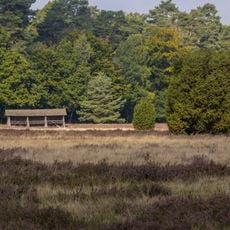
The 1742 house was moved from Hanstedt to Wilsede in 1907, but researchers date its Flett, the central open-hearth living area, to around 1540. The sheep pen on the Emhoff farmstead has belonged to the museum since 2004 and hosts changing exhibitions on the historic heath landscape.
The community of curious travelers
AroundUs brings together thousands of curated places, local tips, and hidden gems, enriched daily by 93,991 contributors worldwide.