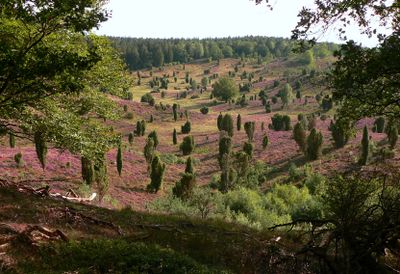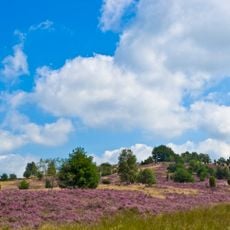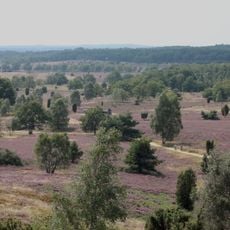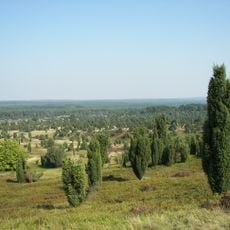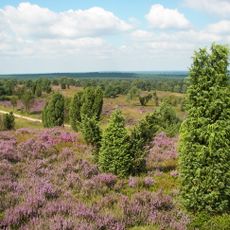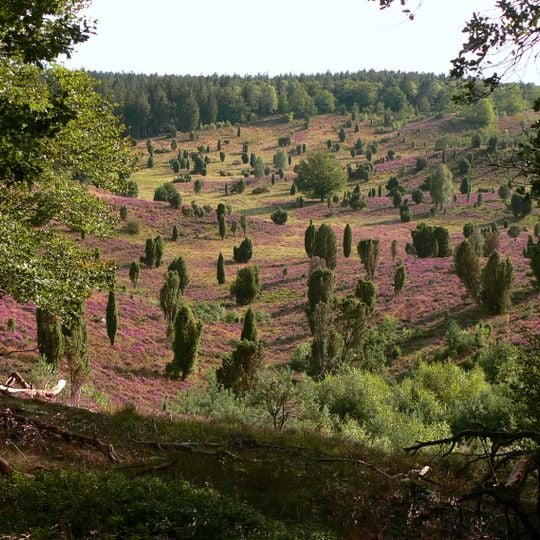
Totengrund, Glacial cirque in the Lüneburg Heath, Bispingen, Germany.
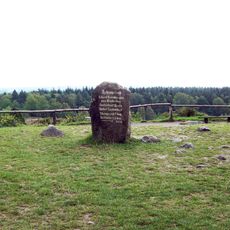
Totengrund is a roughly 30-hectare basin about 1 km south of Wilsede, with walls up to 40 m high. Its floor and slopes are covered in heather and juniper bushes, with scattered pines and a tree line along the rim. The hollow probably formed during the Weichselian cold period through nivation, when snow patches steepened the slopes.
Pastor Wilhelm Bode purchased the land in 1906 to prevent development. His efforts resulted in the creation of Germany's first official nature reserve in 1921.
The name originates from local farmers who saw the infertile ground as unsuitable for crops. This historical perspective remains embedded in the place's identity today.
The reserve can only be accessed on foot or by horse-drawn carriage, as motorized vehicles are prohibited. Well-marked trails guide visitors through the area and allow for different route options.
The name probably means "dead ground": the dry valley floor was too poor to farm. A separate legend says Wilsede's dead were carried through the hollow on the way to burial, avoiding the usual roads. In local folklore the hollow also holds the fallen of two warring giant hosts, from Reinsehlen and Einem.
The community of curious travelers
AroundUs brings together thousands of curated places, local tips, and hidden gems, enriched daily by 93,362 contributors worldwide.