Dünsberg, Summit and archaeological site in Biebertal, Germany.
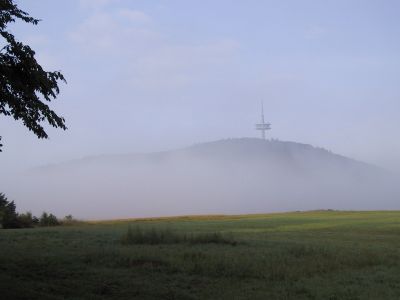
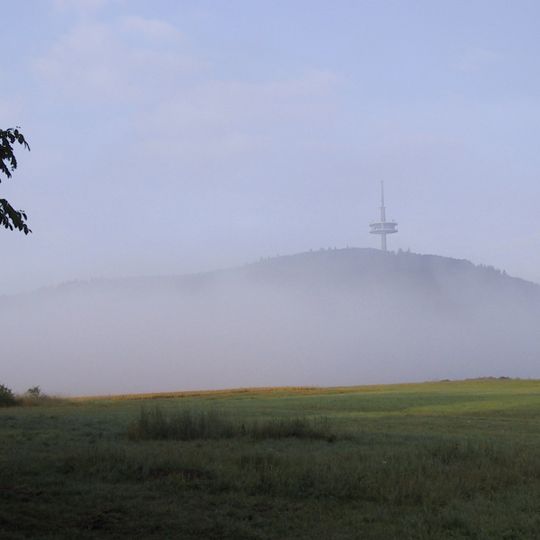
Dünsberg is a summit and archaeological site in Biebertal, central Germany, rising to around 498 meters (1,634 ft) above the surrounding hilly countryside. The summit is encircled by the visible remains of a large Celtic ringfort, and the hillsides below contain traces of human occupation from multiple periods.
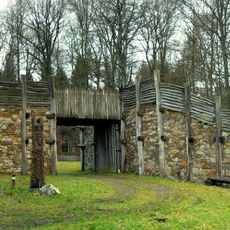
Grave mounds on the southern slope show use in the Neolithic and Bronze Age, and fortifications are detectable from the Urnfield period of the 8th century BC. The Celtic oppidum peaked in the La Tène period around the 3rd century BC, when its three concentric ramparts, up to 10 m high, enclosed 90 hectares and perhaps 2,000 inhabitants. Roman campaigns of 12–8 BC captured it, and decline set in during the 1st century AD.
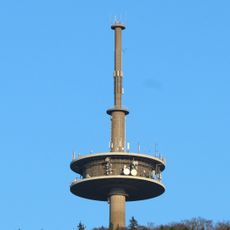
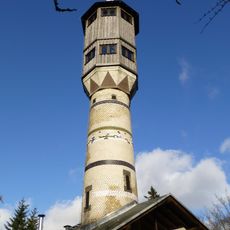
The name Dünsberg is still used for the hill and its ramparts, and the three concentric rings of the Celtic oppidum remain visible, reaching up to 10 metres high. The outer ring encloses 90 hectares, and the hillfort had 14 gates. The Dünsbergturm, built in 1899, has a restaurant and a historic survey stone from the 1867 Central European degree measurement.
Several marked walking trails lead to the top, and parking areas at the base of the hill offer a good starting point. The paths are clearly signed, but sturdy footwear is a good idea since some sections can become slippery after rain.
Although the hill is best known for its Celtic remains, excavations have also turned up evidence of early medieval activity on the site. This suggests the location continued to draw people long after the Celtic settlement had ended.
The community of curious travelers
AroundUs brings together thousands of curated places, local tips, and hidden gems, enriched daily by 92,800 contributors worldwide.