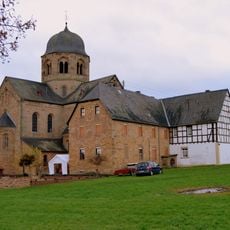
Gut Hermannsberg in Niederhausen, Wine estate and cultural heritage monument in Niederhausen, Germany
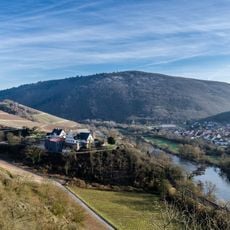
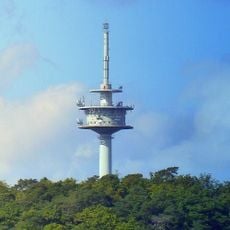
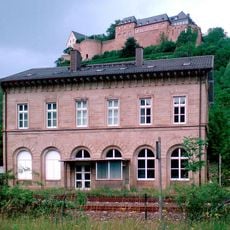
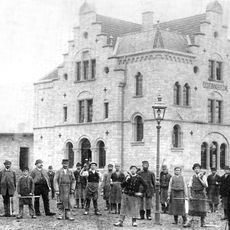
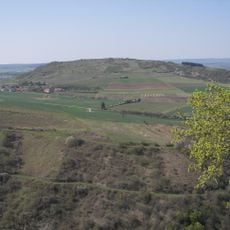
Gut Hermannsberg is a wine estate southwest of Niederhausen in the Nahe Valley, built from 1902 onward as a Prussian state wine domain. Its administration building and pressing house, completed in 1910, are in a historicist Jugendstil style; the pressing house has a curved gable wall that once appeared on the estate's seal and cork brand. The complex also includes workers' housing, a transformer tower and 30 hectares of vineyards on seven VDP.Große Lage sites, and is a protected cultural monument.
The Royal Prussian Wine Domain Schlossböckelheim-Niederhausen was founded in 1901, and the first vines were planted in 1903, partly by convicts; the first harvest followed in 1907. The estate buildings were erected from 1902, with the administration building and pressing house completed in 1910 in historicist Art Nouveau style. In 1925 the domain was expanded to include the Marienthal state wine estate on the Ahr. Since 2010 it has traded as Gut Hermannsberg.
The estate carries names rooted in its Prussian past and is valued by visitors for its location in one of Germany's finest wine regions. The way the buildings are arranged and the work is organized show the craft traditions of winemaking that still define the area today.
Visitors can explore the property and take part in regular wine tastings that often include meals. Overnight accommodations are available, allowing guests to stay for several days and experience the pace of daily vineyard work and wine production.
The wine cellar preserves original industrial lights and machine brackets from the early 20th century, offering a glimpse into how the property adopted early mechanization. These details show that the operation embraced modern equipment and technical innovation at the time.
The community of curious travelers
AroundUs brings together thousands of curated places, local tips, and hidden gems, enriched daily by 94,639 contributors worldwide.