Plästerlegge, Natural waterfall in Hochsauerland, Germany
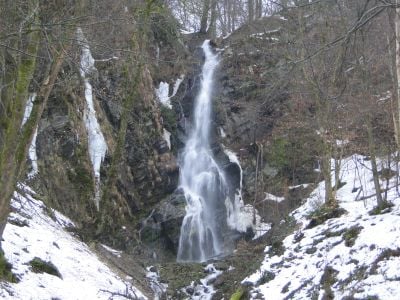
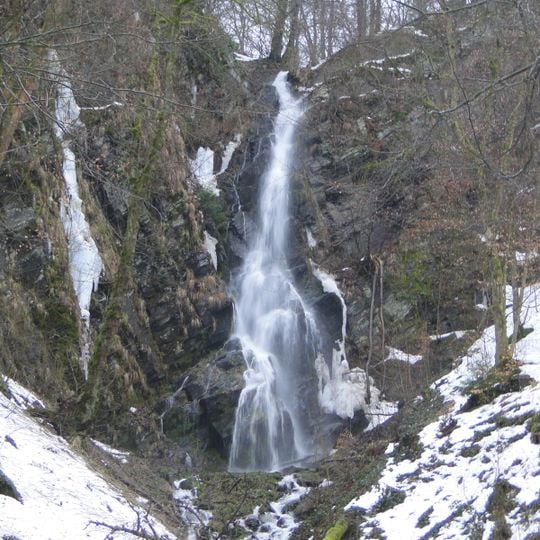
Plästerlegge is the highest natural waterfall in North Rhine-Westphalia, east of the Wasserfall district of Bestwig in the northern Rothaargebirge. The Kippsiepen drops about 20 metres almost vertically over a slate ledge into a shallow, gorge-like basin, then runs some 500 metres as a torrent over debris that may be the remnant of a Weichselian debris glacier. After dry spells the fall can run dry.
The name Plästerlegge comes from Sauerländer Platt, the local Low German dialect: plästern means rain falling in torrents and Legge means slate rock. At the southern edge of the falls, ore from nearby mines was once smelted behind a tower-like breastwork, and the molten lead was poured into the falling water, cooling into small pellets still found at the base.
The name Plästerlegge comes from Sauerländer Platt: plästern means rain falling in torrents, Legge means slaty rock. At the southern edge stands a tower-like structure, a breastwork behind which lead ore from nearby mines was once smelted; the molten lead was poured into the falls, and small lead pellets that cooled instantly can still be found at the foot of the waterfall.
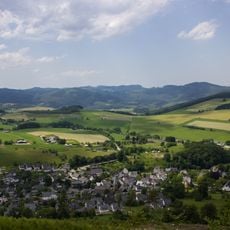
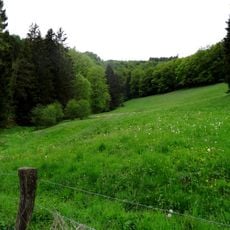
The falls lie east of Bestwig's Wasserfall hamlet in the northern Rothaargebirge, within the 13.7-hectare Plästerlegge – Auf'm Kipp nature reserve. The stream, the Kippsiepen, can run dry after long spells without rain, so time a visit to wet weather. The site is not wheelchair accessible.
The water flow changes dramatically with weather conditions, and during dry spells the falls may stop flowing altogether. This means each season offers a different experience when visiting.
The community of curious travelers
AroundUs brings together thousands of curated places, local tips, and hidden gems, enriched daily by 93,862 contributors worldwide.