Nienwohlder Moor, Nature reserve in Schleswig-Holstein, Germany.
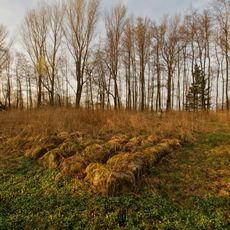
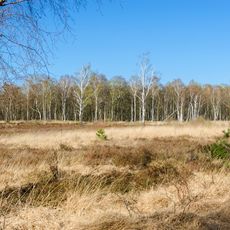
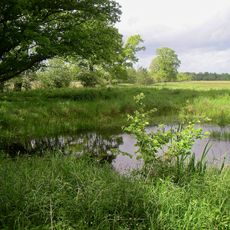
Nienwohlder Moor is a nature reserve in Schleswig-Holstein spanning four communities and combining raised and lowland bogs with interspersed birch, alder, and pine forests. The landscape displays varied habitats within a relatively small area, from open water surfaces to forested sections.
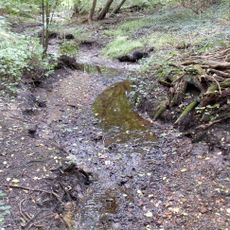
Peat was first cut here in 1804, by hand and used as fuel; during the Napoleonic wars of 1806–1813 it was also shipped down the Alster to Hamburg. Industrial extraction followed in the 20th century, with white peat dug from 84 hectares between 1951 and 1976, partly by machine, and loaded onto trains east of Nahe. The area was first protected in 1980 and redesignated on 25 March 1982 under number 100; rewetting in the 1980s created today's open bog with water-filled peat cuttings.
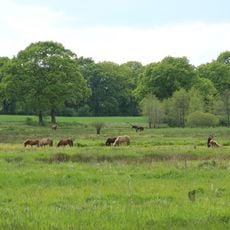
The reserve is tended by the Landesjagdverband Schleswig-Holstein, except for areas owned by the state forestry administration. Cranes return to breed in the undisturbed bog, and the wet meadows are grazed by robust cattle. Information boards stand at several points along the walking paths around the bog.
The reserve is easily accessible with marked trails connecting the four towns and offering several starting points for exploration. Bring binoculars and waterproof footwear for the best experience, particularly during wetter seasons.
The bog lies on the watershed between the North Sea and the Baltic Sea: it drains west to the Lankau, south to the Alte Alster and north to the Norderbeste. From 1951 to 1976 white peat was cut on 84 hectares, first by hand and later by machine; a peat loading point stood by the former Elmshorn–Barmstedt–Oldesloe railway east of Nahe.
The community of curious travelers
AroundUs brings together thousands of curated places, local tips, and hidden gems, enriched daily by 94,382 contributors worldwide.