Stadthalle Heidelberg, Concert hall and convention center in Heidelberg, Germany
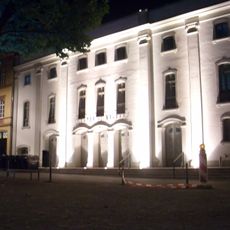
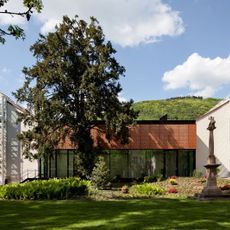
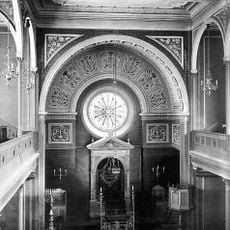
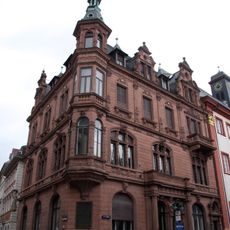
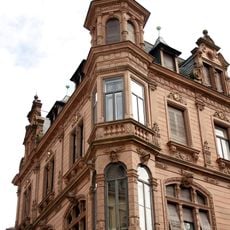
Stadthalle Heidelberg is a concert hall and congress centre on the Neckar in Heidelberg's old town, built 1901–1903 to designs by Jakob Henkenhaf and Friedrich Ebert. Its core is the Festsaal, seating up to 2,481 people, which holds a Voit organ from 1903. The building mixes Gründerzeit and Renaissance elements with Jugendstil interior details.
Stadthalle Heidelberg was built from 1901 to 1903 to designs by Jakob Henkenhaf and Friedrich Ebert, marking the centenary of the 1803 university reform. It was restored true to the original from 1979 to 1980. A planned annex was rejected by a citizens' referendum on 25 July 2010, and after renovation approved in December 2021 the hall reopened on 1 February 2026.
The building was erected for the centenary of the 1803 university reform, as a assembly and festival house for the citizens. Its name is tied to this civic purpose, and the Voit organ of 1903, restored in 1993 by Vleugels, remains a monument instrument with 56 stops on three manuals and pedal. The hall reopened on 1 February 2026 with a concert by the Philharmonic Orchestra.
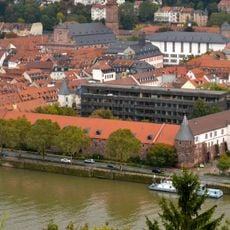
The Stadthalle stands on the Neckar riverbank in Heidelberg's Altstadt. The main entrance faces the river; the Great Hall seats up to 2,481 people. After the 2021–2026 renovation, the hall has lifting platforms that allow tiered or flat seating. Visitors should check which entrance is open, as the building is also used for private functions.
The Stadthalle's 1903 Voit organ is considered Germany's first large organ with electric action and a movable console. Its original console includes a fourth manual for a remote division that was never built, and a general swell allows continuous volume changes across the whole instrument.
The community of curious travelers
AroundUs brings together thousands of curated places, local tips, and hidden gems, enriched daily by 92,883 contributors worldwide.