Hirsvogelsaal, Renaissance hall in Nuremberg, Germany
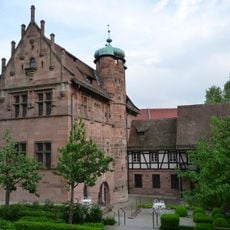
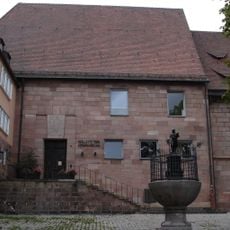
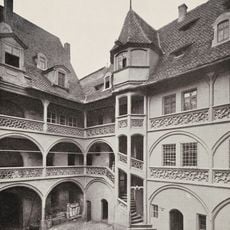
Hirsvogelsaal is a 16 by 6.6 metre early Renaissance hall built in 1534 for the Nuremberg merchant Lienhard III Hirschvogel. Its interior is lined with a nearly three-metre-high carved wooden panelling attributed to Peter Flötner, and the ceiling painting The Fall of Phaeton by Dürer pupil Georg Pencz consists of 20 canvas panels. The hall was rebuilt in 2000 in the garden of Tucherschloss, about 100 metres from its original site.
A wealthy merchant had this hall built in 1534 as a festival and living space for his wedding. It was destroyed in World War II but later reconstructed using old plans and photographs.
The decoration shows twelve emperor busts and Renaissance ornaments that expressed the wealth of Nuremberg's merchant families. This design was a sign of power and cultural ambition in society at that time.
The room is located within the Tucherschloss Museum and can be viewed when exploring or attending special events. It is worth taking time to look at the decoration details, as the space is richly furnished with artistic elements.
During restoration in 2000, the entire room was rotated 180 degrees, fundamentally changing where the windows faced and how light entered the space. This unusual decision altered how visitors today perceive the wall decorations and ceiling painting.
The community of curious travelers
AroundUs brings together thousands of curated places, local tips, and hidden gems, enriched daily by 94,637 contributors worldwide.