Wiesenkirche, Gothic parish church in Soest, Germany
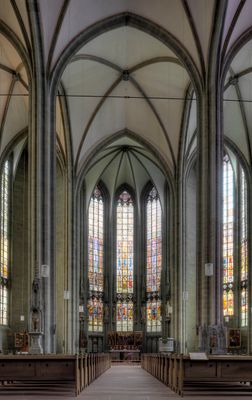
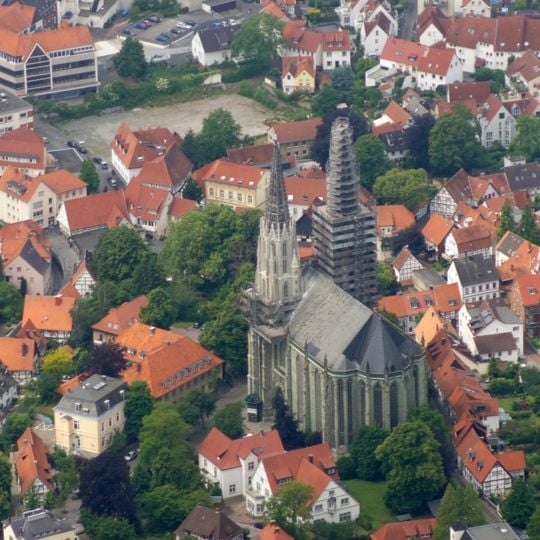
Wiesenkirche is a Gothic parish church in Soest featuring three naves of equal height with slender pillars that integrate the choir into the hall space. White cross-ribbed vaults span the ceiling, creating a bright and open interior.
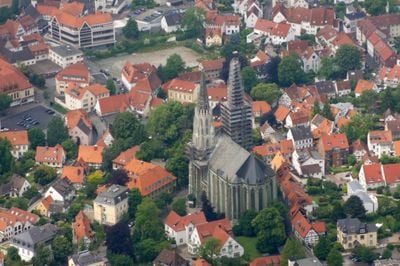
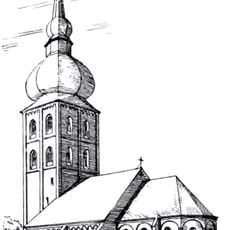
The foundation stone was laid in 1313, with Johannes Schendeler as first master builder; the choir was finished by 1376. Work on the twin west towers began in 1421 under Johannes Verlach and stopped after 1525, leaving only the north tower base at roof height. King Friedrich Wilhelm IV funded the towers in 1840; built to August Soller's plans from 1861, they were finished in 1874/75 and reach 75 metres.
The church was built to house a 12th-century Marian image that drew pilgrims from far and wide. Removed at the Reformation, it was kept in the attic by legend and handed to neighbouring Werl in 1661 as penance for a forest offence; over 200,000 pilgrims still come yearly to the Mother of God of Werl. In the south choir aisle stands the Aldegrever altarpiece of 1526, whose painted wings show a Nativity and an Adoration of the Magi.
The church's green sandstone material requires ongoing maintenance due to its vulnerability to weather and structural strain. Visitors should be aware that restoration work may take place and could affect access to certain areas.
Eleven over-life-size statues stand between the choir windows, not in them: Christ and Mary flanked by apostles and John the Baptist, carved from Baumberger sandstone around 1310–1325. The Soest arrangement has places for sixteen figures, unlike Cologne's fourteen, and several sculptors' hands can be told apart.
The community of curious travelers
AroundUs brings together thousands of curated places, local tips, and hidden gems, enriched daily by 92,894 contributors worldwide.