Koburg, Villa and architectural heritage monument in Mettmann, Germany
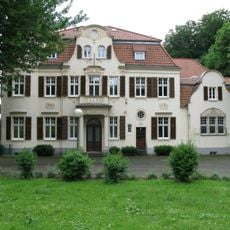
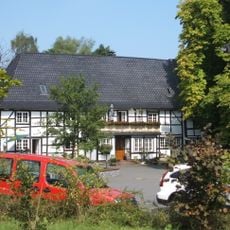
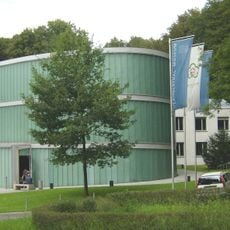
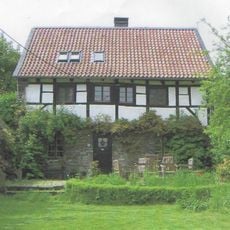
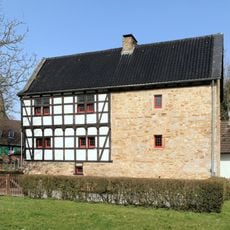
Koburg is a villa with castle-like architecture built in 1921 in the Niederbergische Neandertal region of Mettmann. The structure reflects regional building standards and holds the status of an architectural heritage monument.
Industrialist Wilhelm Kocherscheidt had the villa built in 1921. After the Nazi seizure of power, SA-Standarte 258 used it as quarters, and its isolated position made it a collection point, protective custody site and torture cellar for detainees from the Mettmann district; about 100 regime opponents were held there. With the opening of Börgermoor camp in summer 1933 it lost this function. In July 1949 the Wuppertal court sentenced ten former SA members in the Koburg trial.
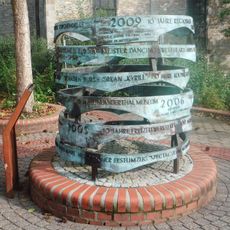
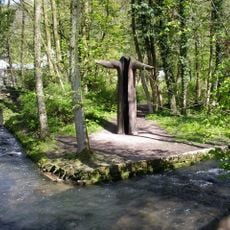
A memorial at Lavalplatz in Mettmann features three black steel pipe grids arranged in a triangle, commemorating the individuals who suffered at Koburg during 1933-1945.
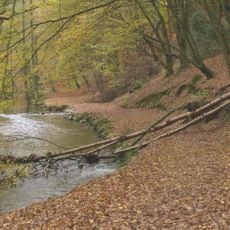
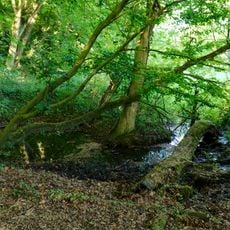
The villa stands in the Neandertal valley southwest of Mettmann's centre, reached on foot via paths through the valley. The memorial is separate, at Lavalplatz in the town centre: three black steel-pipe grids set in a triangle, each with an inscribed plate, their paved extensions pointing to the Catholic church, the Protestant church and the town hall.
The Koburg name was coined in Mettmann vernacular as a short form of "Kocherscheidts Burg". The villa's isolated location later made it a collection point and torture cellar for detainees from the Mettmann district under SA-Standarte 258; about 100 regime opponents are said to have been held there.
The community of curious travelers
AroundUs brings together thousands of curated places, local tips, and hidden gems, enriched daily by 93,900 contributors worldwide.