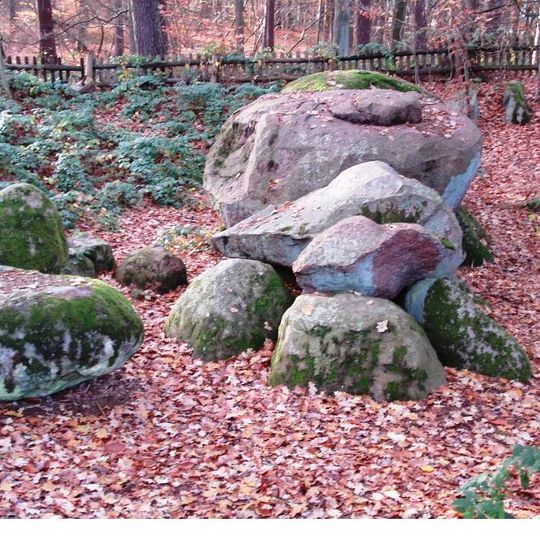
Großsteingrab Blankensee, Neolithic dolmen in Lübeck, Germany
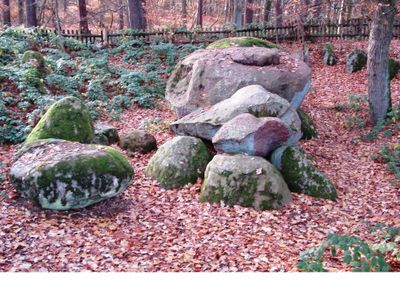
Großsteingrab Blankensee is a megalithic burial chamber in Lübeck built from large erratic boulders arranged into a chamber formation. The structure features four supporting stones on the northern side and multiple stones on the southern side, all topped by four substantial capstones spanning about eight meters in length and three meters in width.
The grave was built between 3500 and 2800 BC by the Funnel Beaker Culture and stands as an early example of organized burial practices in northern Europe. Excavations in 1857 revealed human bones, pottery fragments, a flint axe, and a bronze knife, showing how this culture honored their dead and valued possessions.
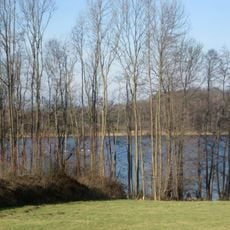
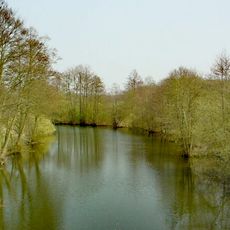
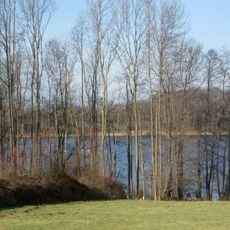
The name Blankensee reflects the site's connection to the nearby lake, and the grave became a significant landmark for the earliest communities in this region. Visitors can see how such structures served as gathering points and communal monuments in the ancient landscape.
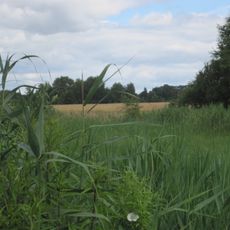
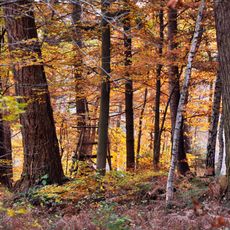
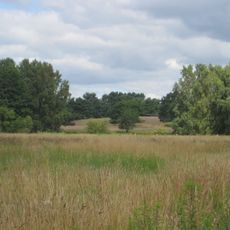
The grave sits in a wooded area near highways B 207 and A 20 and is surrounded by a protective fence to preserve the archaeological site. It is easy to reach by car, but visitors should be prepared for a natural setting with no facilities or signage on the site.
The burial site went unnoticed for centuries until workers in the 19th century accidentally brought attention to it, leading to the important excavations of 1857. This discovery helped archaeologists understand how early megalithic construction emerged in this region.
The community of curious travelers
AroundUs brings together thousands of curated places, local tips, and hidden gems, enriched daily by 91,212 contributors worldwide.