Südliche Fröttmaninger Heide, Protected area in northern Munich, Germany
The Südliche Fröttmaninger Heide is a 347-hectare protected heath on Munich's northern edge, part of the Munich green belt. Its dry, gravelly soil supports calcareous dry grasslands, open gravel patches with ponds, and light pine woods. Sheep grazing and annual mowing keep the heath open.
Military use began in the mid-19th century, when Bavarian artillery trained and fired on the heath. In 1935 the Wehrmacht built a Heeresnebenmunitionsanstalt in the northern part, and the US Army used the site during the Cold War until withdrawing in 1971–72. The Bundeswehr continued training until the area was protected: a nature reserve ordinance was issued on 8 April 2016.
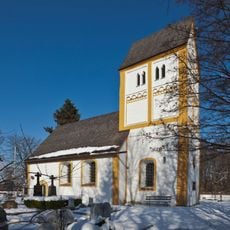
The name Fröttmaninger Heide refers to the heath near the former village of Fröttmaning, whose Heilig-Kreuz-Kirche stands just east of the reserve. The open heath is maintained by sheep grazing or annual mowing, a continuation of traditional pasture use that prevents trees from taking over. The area is part of Munich's green belt.
The 20 km network of paths has been fully cleared of munitions and wartime ordnance since 2020, but the surrounding heath still holds shells and duds just below the surface, so walkers should not leave the trails. The area is split into four zones with different rules, agreed in a citizen participation process that ran from January 2012 to May 2015.
From the reserve you can see the Allianz Arena while walking through one of Central Europe's largest continuous heathland areas. This contrast between nature and modern structure is rarely found in the region.
The community of curious travelers
AroundUs brings together thousands of curated places, local tips, and hidden gems, enriched daily by 92,929 contributors worldwide.