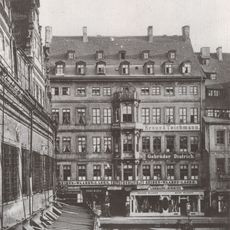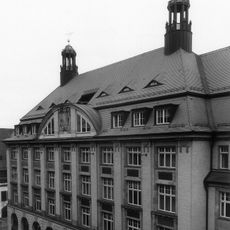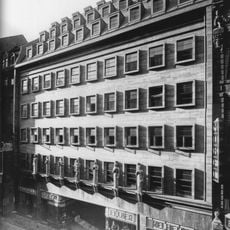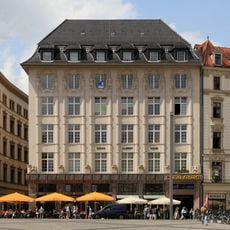
Untergrundmessehaus, Abandoned underground exhibition hall in Leipzig, Germany
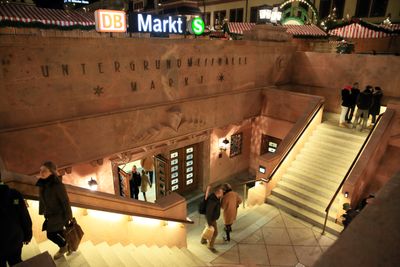
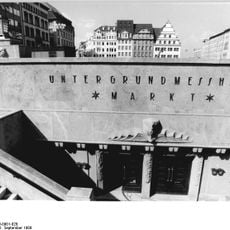
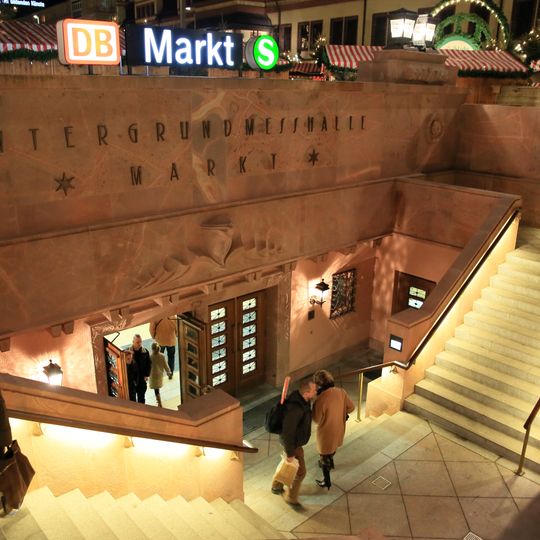
The Untergrundmessehaus was an underground exhibition hall in Leipzig featuring a two-flight Art Deco staircase at its entrance. The subterranean space covered roughly 1,800 square meters (19,400 square feet) and accommodated exhibitors during the city's trade fairs.
The building opened in 1924 as the world's first underground exhibition hall to serve the city's growing trade fairs. It was demolished in 2005 to make room for the City Tunnel construction project.
The site reflects how the city solved space challenges by building beneath the surface during its important trade fair period. The Art Deco entrance staircase showed visitors that this was a forward-thinking venue for commerce.
The original site was demolished in 2005, but its distinctive staircase was preserved as part of today's U-Bahn station. Visitors can see this architectural heritage at the Leipzig Market train station, which was built where the original hall once stood.
The staircase was designed by Otto Droge and later incorporated into the modern U-Bahn station that replaced it. This turned the original structure into a living part of today's transport network.
The community of curious travelers
AroundUs brings together thousands of curated places, local tips, and hidden gems, enriched daily by 91,272 contributors worldwide.