Mennonitenkirche Leer, Neoclassical church in Leer, Germany
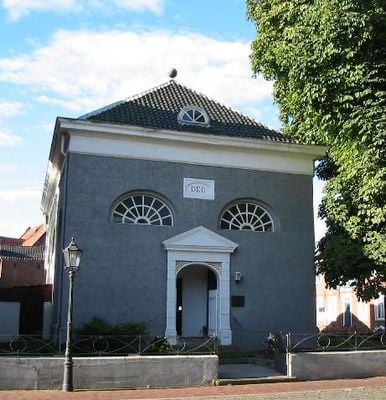
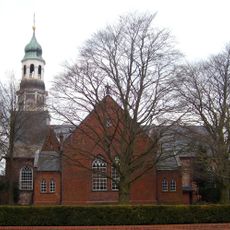
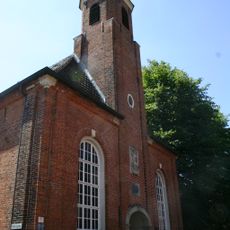
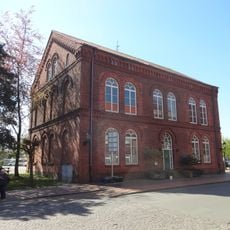
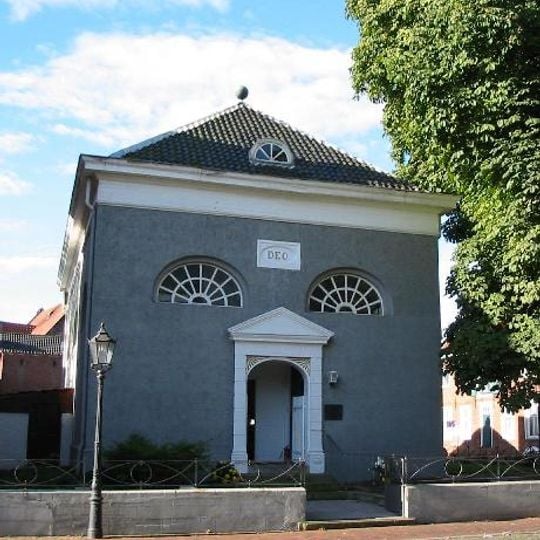
The Mennonitenkirche Leer is a neoclassical church with clean lines, symmetrical proportions, and tall arched windows along its walls. The interior follows the Mennonite preaching church principle, with a central pulpit surrounded by white-painted wooden pews.
The Mennonite community in Leer was founded around 1540 by Dutch religious refugees. East Frisian counts granted them protection, and members worked in weaving and trade, making Leer a centre of linen production. A second Flemish congregation formed around 1644 and had its own church, demolished after the two merged in 1767. The present church was built in 1825; services had previously been held in rented rooms, with lay preachers until 1728.
The congregation used Dutch in their services until the early 1900s, maintaining a strong link to their ancestral heritage. This language tradition shaped the religious identity of Mennonites in the town for generations.
The church stands in the town centre of Leer, a short walk from the historic centre. Visitors enter through the neoclassical west portal with its triangular pediment; the interior is a single hall, so the pulpit and the two white-painted box pews are seen at once. The building is a Lower Saxony heritage monument.
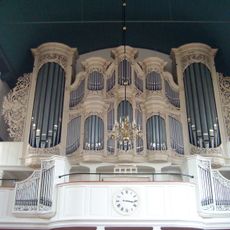
The organ was built in 1860 by Brond de Grave Winter, who likely reworked the existing case of the predecessor instrument by Wilhelm Eilert Schmid from 1825/1826. Eight of its ten registers are original; the Dutch firm Van der Putten restored it in 2013/2014 and rededicated it on 28 September 2014.
The community of curious travelers
AroundUs brings together thousands of curated places, local tips, and hidden gems, enriched daily by 93,982 contributors worldwide.