Haneburg, Renaissance château in Leer, Germany
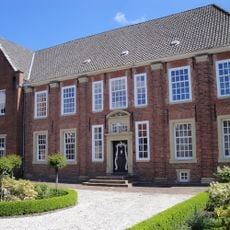
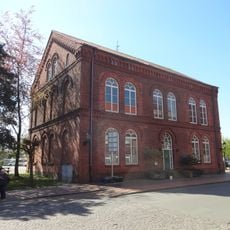
Haneburg is a two-winged residential castle of red brick at the end of the chestnut-lined Haneburgallee, in the Dutch-influenced old town of Leer. The southern Renaissance wing with its gateway arch dates from 1621, the northern wing from 1671; the two wings meet at right angles. Inscriptions above the gateway and the main entrance record the building dates.
Hayo Unken, chieftain of Leer, built the castle in the mid-15th century; it passed through the Frese family to the Hane family, who gave it its name. In 1621 Joest Hane, steward of the Count of East Frisia in Stickhausen, added the southern Renaissance wing, and his son Dietrich Arnold Hane built the northern wing in 1671. The city of Leer bought the building in 1908; after 1945 it served as an old people's home, and the district of Leer restored it between 1973 and 1976.
The building takes its name from the Hane family, who acquired it after the Frese family. Inscriptions above the gateway and main entrance record the 1621 and 1671 building phases. Today the Volkshochschule for the city and district of Leer uses it, and art exhibitions and conferences are held there temporarily.
The château is located at Haneburgallee 8 and welcomes visitors to explore the exterior grounds and park areas. Plan to spend time walking through the landscaped surroundings to fully appreciate the setting.
The building's two wings carry dated inscriptions still legible today: above the gateway arch to the residential wing, a text records Joest Hane building in 1621, and above the main entrance another names Didrich Arend Hane and Anna Margareta von Kniphausen, begun 3 June and finished 30 September 1671.
The community of curious travelers
AroundUs brings together thousands of curated places, local tips, and hidden gems, enriched daily by 93,983 contributors worldwide.