Gipskarstlandschaft Bad Sachsa und Walkenried, former nature reserve in Lower Saxony, Germany
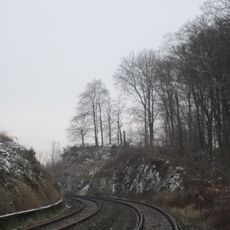
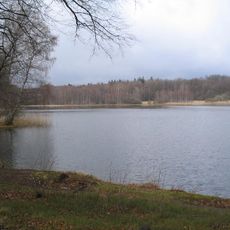
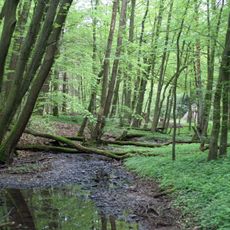
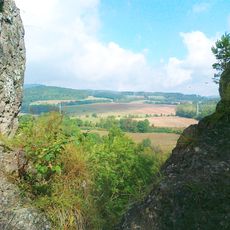
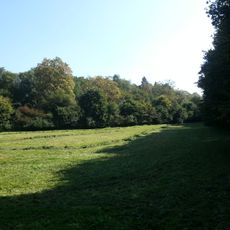
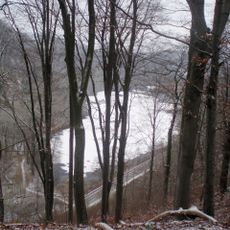
The Gipskarstlandschaft Bad Sachsa and Walkenried is a protected natural area in the Harz region characterized by gypsum rock formations, beech forests, caves, and sinkhole structures. The terrain displays rough rocky outcrops, dense woodlands, small gorges, and wet meadows with ponds that together create a varied natural landscape.
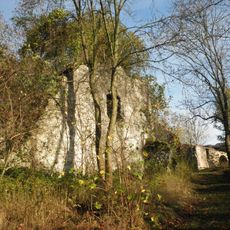
The area was protected as a nature reserve on 20 December 2007 under the code NSG BR 129, covering 378 hectares across seven sub-areas. In February 2021 it was absorbed into the newly designated "Gipskarstgebiet bei Bad Sachsa" reserve. Gypsum was quarried in the Lohof pit north of Tettenborn from the early 1970s to the late 1990s; after extraction ended, no recultivation took place, leaving steep walls and spoil heaps as habitats.
The area's name reflects the gypsum karst formation that has shaped human activity for centuries. Visitors and locals now use this land as a space for walks and to observe the natural processes that continuously reshape the landscape.
The Karstwanderweg Südharz runs through parts of the former reserve. Around the Oberer and Unterer Kranichteich, a roughly three-kilometre nature trail explains gypsum, nature and history, with spurs to the Priesterstein cave and the Kranichstein quarry. The Wieda loses its surface water below Walkenried, flowing partly underground through gravel banks.
The Pfaffenholz wood northeast of Tettenborn holds several very deep sinkholes and the Schwinde of a small stream, protected as the "Pfaffenholzschwinde" natural monument. In the abandoned Lohof quarry north of Tettenborn, gypsum was mined from the early 1970s to the late 1990s; after closure, no recultivation took place, leaving steep walls, spoil heaps and hollows where rock-ledge plants, dry grassland and many insects, reptiles and birds settled.
The community of curious travelers
AroundUs brings together thousands of curated places, local tips, and hidden gems, enriched daily by 94,637 contributors worldwide.