Tarnewitzer Huk, Protected area in Boltenhagen, Germany.
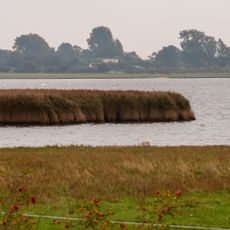
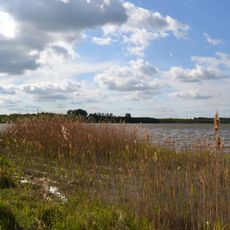
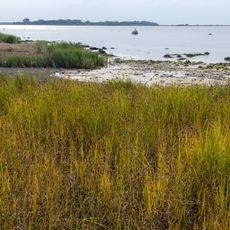
Tarnewitzer Huk is a 69-hectare nature reserve on an artificial peninsula northeast of the Tarnewitz district of Boltenhagen. The spit, built up in the 1930s, separates the Boltenhagen Bay from the Wohlenberger Wiek. Since 1993 the area has been left to unhindered succession, so scrub and young woodland of sea buckthorn, willow, birch and aspen now cover most of it.
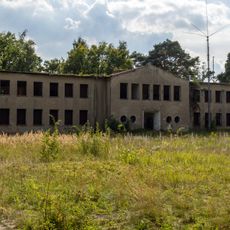
The present land was created in the 1930s by large-scale sand dredging in the shallow water off Tarnewitz. A military airfield was built on the fill, protected from flooding by a 1.5-metre dike, with a harbour added in the southeast. After the Second World War Soviet forces blew up the airfield and dismantled the installations; the area has been left to natural succession since.
The name Huk refers to a headland jutting into the water; the reserve is a man-made peninsula separating the Boltenhagener Bucht from the Wohlenberger Wiek. Until the Middle Ages the area was mainland and formed the link to the former Lieps peninsula before storm surges eroded it. Today the spit is closed to the public and left to natural succession.
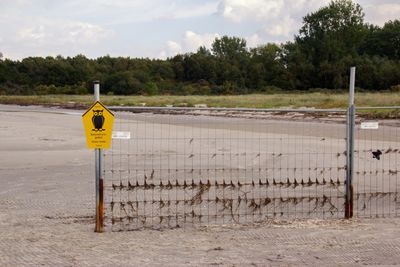
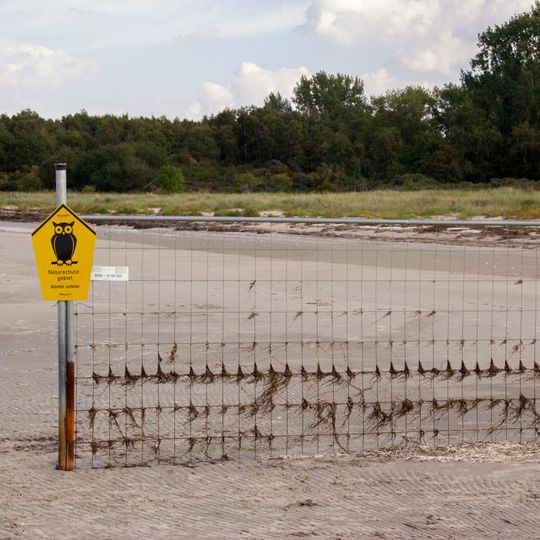
There are no public paths in the reserve, and access is closed because of contaminated sites (Altlasten) left by military use. The area lies northeast of the Tarnewitz district of Boltenhagen, between the Boltenhagen Bay and the Wohlenberger Wiek. A 2006 management plan coordinates conservation with water sports and fishing interests.
The reserve is a research site for unmanaged natural development under process protection. Since the 1990s shooting ranges have stayed free of woody growth, while the rest has advanced to scrub and pioneer forest with sea buckthorn, willows, birch and aspen. The natterjack toad lives here, and red-backed shrikes and scarlet rosefinches are among the notable birds.
The community of curious travelers
AroundUs brings together thousands of curated places, local tips, and hidden gems, enriched daily by 93,255 contributors worldwide.