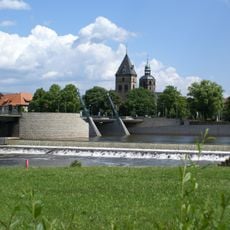
Wesermühlen, Watermill complex in Hamelin, Germany
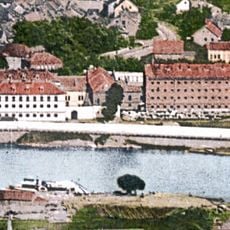
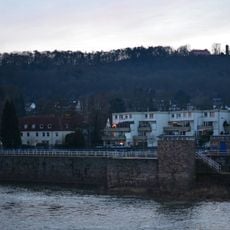
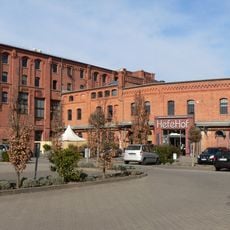
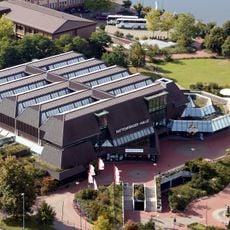
Wesermühlen is an architectural complex of milling structures, silos, and industrial facilities stretching along the Weser River promenade. The ensemble combines production areas with residential spaces, revealing how work and daily life were closely intertwined in the past.
The Pfortmühle, first documented in 1345, was rebuilt larger after a 1745 Weser flood and reconstructed in 1878 as a five-storey mill with 12 grinding passages. The Werdermühle, a grain mill from 1635, was replaced in 1864 by a brick building with 12 grinding passages. A dust explosion in 1887 killed eleven people. The Pfortmühle burned in 1893 and was replaced by the present historicist building of 1893–1895.
The name reflects the mills that once operated here along the river and shaped the town's identity. Visitors can still observe how work and living spaces were integrated, with production areas directly connected to residential quarters.
The complex sits directly on the Weser River promenade and is easily visible from the riverbank. Plan to spend time exploring the different building types and how they are arranged together.
The Pfortmühle's water-power plant dates from 1912, when milling switched to electricity; its turbine and generator survive in the building. The mill burned in 1893 and was rebuilt in 1893–1895 in Historicist style, and after the city bought it in 1975 and renovated it in 1992 it became a library and restaurant.
The community of curious travelers
AroundUs brings together thousands of curated places, local tips, and hidden gems, enriched daily by 94,637 contributors worldwide.