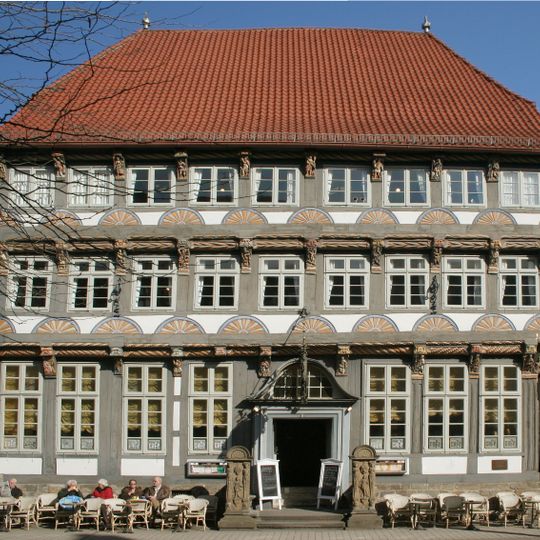
Stiftsherrenhaus, Renaissance timber-framed building in Osterstraße, Hamelin, Germany.
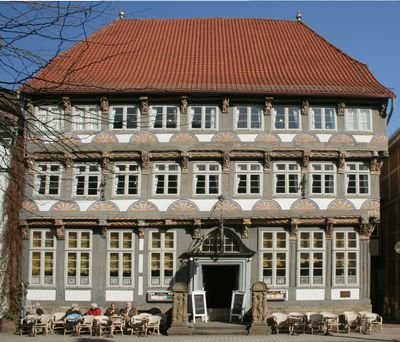
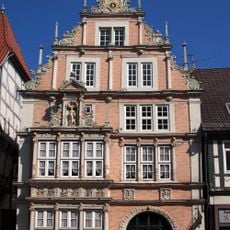
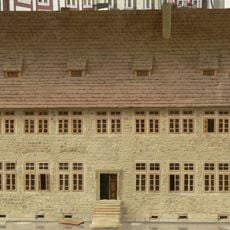
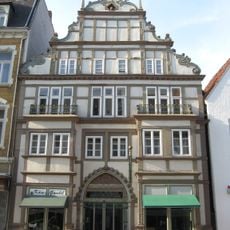
The Stiftsherrenhaus is a Weser Renaissance house on Osterstraße in Hamelin's old town, completed in 1558 by an unknown master builder for the merchant and mayor Friedrich Poppendiek. Its facade carries biblical scenes and ancient planetary gods, and the house stands with its eaves facing the street rather than its gable.
The Stiftsherrenhaus was completed in 1558; its master builder is unknown. The patron was not a cleric, as the name suggests, but the merchant and mayor of Hamelin Friedrich Poppendiek. The building is named after its facade of biblical motifs and ancient planetary gods, imagery otherwise associated with church patrons.
The name Stiftsherrenhaus suggests canons, but the builder was the merchant and mayor Friedrich Poppendiek. The facade earned the name: its many biblical scenes and antique planetary gods were motifs usually commissioned by the church. Front stones on the entrance platform show Lucretia and Ecclesia.
The building stands in the pedestrian zone of Hamelin's old town and is easy to reach on foot. Upper floors now house parts of a museum, while a cafe on the ground floor offers refreshment to visitors.
The stones at the entrance platform feature two special figures: the Roman Lucretia embodying virtue and Ecclesia symbolizing the church. These symbols reveal which values the house owners valued and how they expressed their place in society.
The community of curious travelers
AroundUs brings together thousands of curated places, local tips, and hidden gems, enriched daily by 92,704 contributors worldwide.