Gläserner Mönch, Natural rock formation in Halberstadt, Germany.
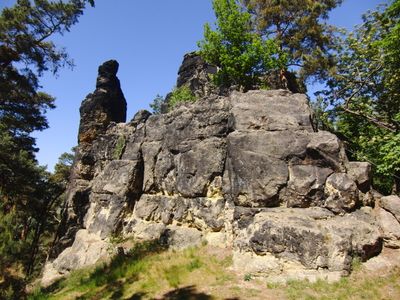
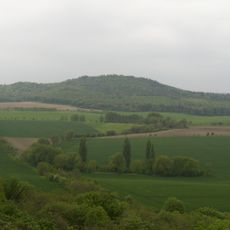
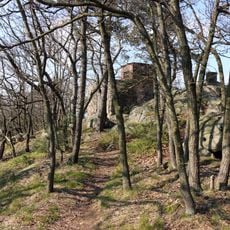
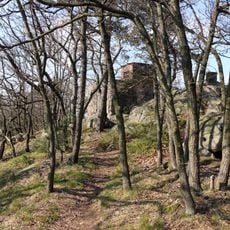
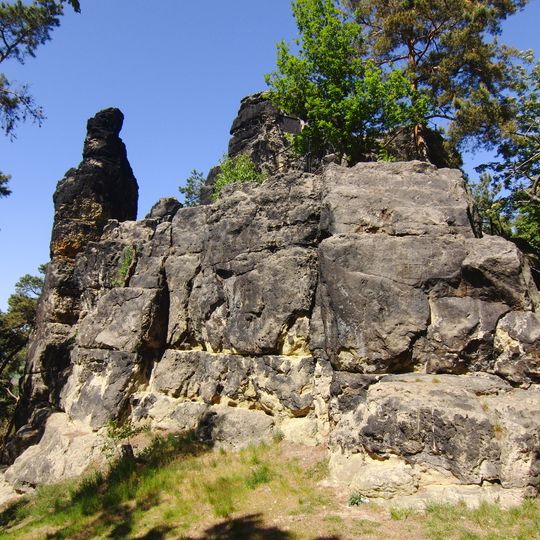
Gläserner Mönch is a sandstone cliff in the Thekenberge hills, about 10 metres high and rising to 180 metres above sea level. It was formed during the Upper Cretaceous and overtops the surrounding forest, making it visible from afar. One of its rock shapes resembles a hooded monk.
The rock was already used in the Bronze Age, around 4,000 years ago, as a cult site and lookout over the surrounding land; a crouched burial and a riveted dagger were found here. Germanic peoples are thought to have called it Thorstein because its shape resembles Thor's hammer Mjölnir.
The name comes from the rock's shape, which resembles a hooded monk; "gläsern" derives from the dialect word glaren, meaning to glow, because the sandstone appears to shine in strong sunlight. A local legend says a monk and a nun broke their vow of chastity here and were turned to stone as punishment. The rock was long used as a cult site and lookout point.
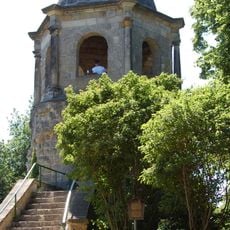
The rock is reached only on foot or by farm tracks closed to through traffic. From the ruined Landhaus inn, a steep staircase of 169 steps climbs to the summit, where further steps lead onto the rock itself. Routes also start in Langenstein, about 2 km west, or from the Langenstein-Zwieberge memorial car park, 2 km southeast.
The rock's earlier name, Thorstein, comes from its shape resembling Mjölnir, the hammer of the god Thor; Germanic peoples are thought to have used it. A Bronze Age crouched burial and a riveted dagger, about 4,000 years old, were found here.
The community of curious travelers
AroundUs brings together thousands of curated places, local tips, and hidden gems, enriched daily by 92,674 contributors worldwide.