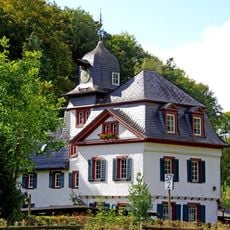
Görresburg, Archaeological site in Nettersheim, Germany.
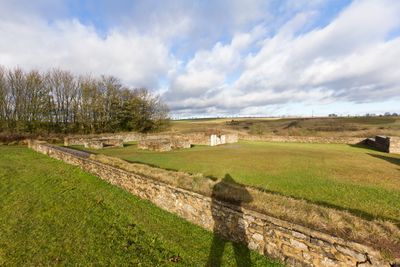
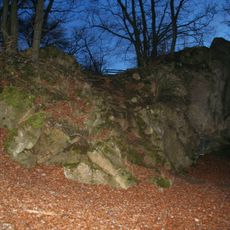
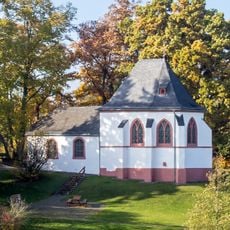
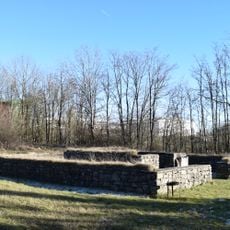
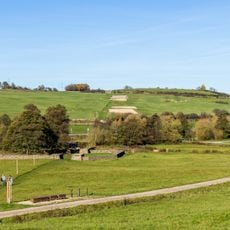
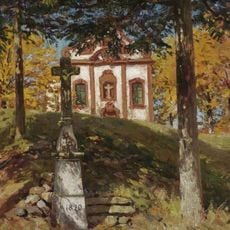
Görresburg is an archaeological site in Nettersheim with remains of a Roman temple, residential buildings, fortifications, and original street layouts from the ancient Marcomagus settlement. The location spans a landscape where visitors can explore these different structures in their original spatial arrangement.
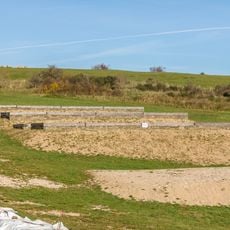
A fenced cult site with an earthen altar stood here from the second half of the 1st century AD; the main temple was built in the mid-2nd century and the sanctuary was probably used until the early 5th century. It was discovered in 1909 and excavated by the Provincial Museum Bonn under Hans Lehner and Joseph Hagen, yielding more than 40 inscribed stones. The finds were conserved and partly reconstructed in 1976 and 1977.
The site is named after an old field name used before the Roman temple was found, so "Görresburg" does not refer to a castle. The sanctuary was dedicated to the Matronae Aufaniae; more than 40 inscribed stones and fragments were recovered, and replicas of three votive stones now stand at the temple wall. The originals are kept in the Rheinisches Landesmuseum in Bonn.
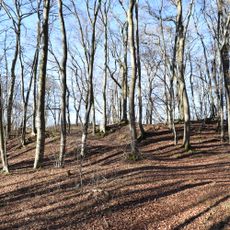
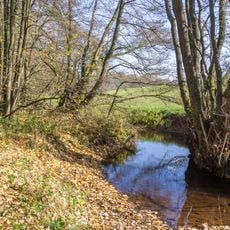
The site lies on a hill above the Urft valley near Nettersheim. The building outlines were secured and partly reconstructed in 1976 and 1977, and replicas of three votive stones stand at the temple wall. Since 1977 the sanctuary has been open to visitors; it is now part of the Archaeological Landscape Park opened on 18 May 2014, which covers the vicus up to the Steinrütsch in the Urft floodplain.
The name "Görresburg" comes from an old field name used before the Roman temple was found in 1909, so it does not refer to a castle. Excavations by the Bonn Provincial Museum under Hans Lehner and Joseph Hagen recovered more than 40 inscribed stones, now kept in the Rheinisches Landesmuseum Bonn.
The community of curious travelers
AroundUs brings together thousands of curated places, local tips, and hidden gems, enriched daily by 94,031 contributors worldwide.