Hauptfriedhof Worms, Cultural heritage cemetery in Worms, Germany.
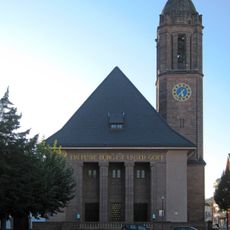
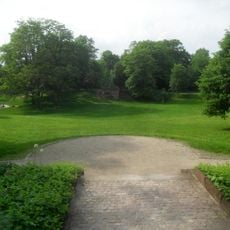
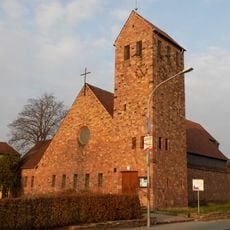
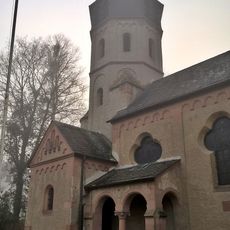
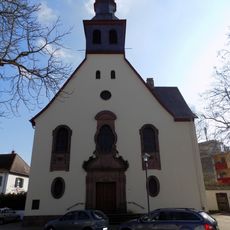
The Hauptfriedhof Worms is a north-south oriented, elongated wooded park cemetery. Its main entrance at the southwest corner has a chapel-shaped mourning hall, a mortuary and administrative buildings in neo-Romanesque sandstone. Metzler's original layout is enclosed by a horseshoe-shaped main path, with three axes by Thierolf extending north and a Muslim burial field in the northeast.
The cemetery was laid out between 1899 and 1902 after Worms decided in 1898, just after annexing Hochheim, to replace the flood-prone Rheingewannfriedhof. Karl Hofmann and then Georg Metzler planned the park cemetery, which opened on 22 March 1902. A new Jewish cemetery was added to the east in 1911, and the last extension in 2009 created a Muslim burial section.
The cemetery displays gravestones with Hebrew inscriptions that record the lives of Jewish residents across centuries. These monuments shape the character of the grounds and reflect the heritage of the community that once lived here.
The main entrance with the mortuary hall and administration buildings sits at the southwest corner; the grounds run north as a long, wooded rectangle. The original Metzler layout is enclosed by a horseshoe-shaped main path, with three axes added to the north and the newer sections east of them. The lime avenue along Höhenstraße, planted in 1901, is a protected natural monument.
The late Gothic cemetery cross from 1493, carved by Master Thomas, was moved here in 1909 from the Bahnhof cemetery; it originally stood at the Amandus cemetery near the Liebfrauenkirche. Its curved figure of Christ with flowing hair and fluttering loincloth shows the influence of Niclas Gerhaert van Leyden.
The community of curious travelers
AroundUs brings together thousands of curated places, local tips, and hidden gems, enriched daily by 93,138 contributors worldwide.