Hardtburg, Medieval castle ruin in Euskirchen, Germany
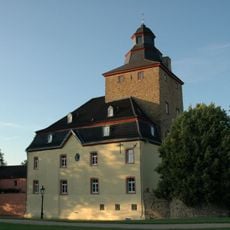
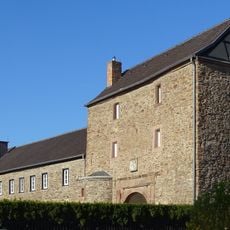
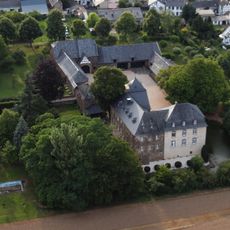
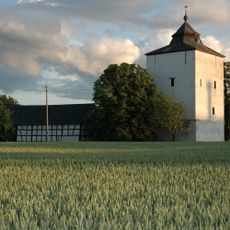
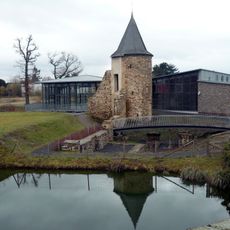
Hardtburg is a moated castle ruin in the Hardtwald south of Stotzheim, a district of Euskirchen, at the northern edge of the Eifel. The whole complex with its surrounding moat measures 155 by 107 metres; a ring wall up to seven metres high but only 60 cm thick encloses the outer bailey and the main castle, which sits on higher ground. A bridge over the moat leads through a gate tower to the outer bailey, where 18th- and 19th-century buildings stand; a second ditch and a 50 by 40 metre zwinger separate it from the inner ward, whose 9.5 by 9.3 metre keep rises about 20 metres.
The castle probably dates from the 11th or 12th century, built by a lord of Har(d)t first mentioned in 1105; the earliest documentary record is from 1166. In 1205 Archbishop Bruno of Sayn captured and partly destroyed it. Count Frederick of Hochstaden gave it to the Cologne archbishopric in 1246, and it remained the seat of the Amt Hardt administration until 1794. The outer bailey and zwinger were added in the 14th century, and drawings from 1725 show the castle already in ruins.
The name Hardtburg combines the Old High German words for wood or forest and castle. Since 1965 the site has been maintained, and the outer bailey now houses a state forestry office (Revierförsterei). The keep is opened only in autumn and winter, timed around the breeding seasons of the birds nesting there.
Access to the castle itself has been closed since 2015 because of damage to the ruin and the visitor bridge; as of July 2025 no reopening date had been set. The circular path around the moat remains open. The keep is only climbed at certain times in autumn and winter, timed to the nesting birds.
The keep hosts nesting birds during spring and summer, making the ruin a valuable habitat for several species. This seasonal use shows how abandoned structures can find new purpose in nature.
The community of curious travelers
AroundUs brings together thousands of curated places, local tips, and hidden gems, enriched daily by 93,941 contributors worldwide.