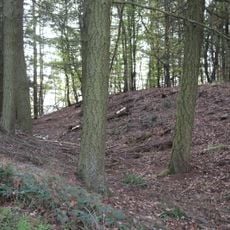
Hohe Buche, Volcanic hill in Rhineland-Palatinate, Germany
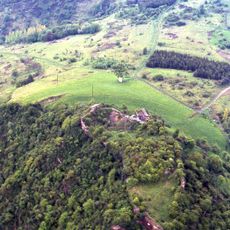
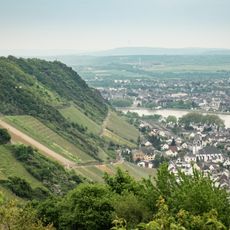
Hohe Buche, also called Fornicher Kopf, is a 318 m volcanic cone in the Eifel between Brohl and Namedy, close to the Rhine valley and the Laacher See. Its last eruption occurred about 110,000 years ago, producing basalt lava.
The formation resulted from ancient volcanic activity that shaped the landscape through lava flows. The area was actively used and settled during Roman and medieval periods when populations relied on the surrounding landscape.
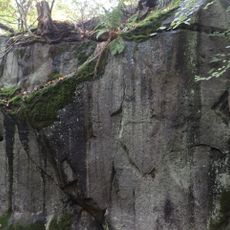
The name Fornicher Kopf refers to the nearby village of Fornich by Namedy. The basalt quarried here in Roman times was used in the construction of the Roman bridge at Trier. Geologist Ulrich C. Schreiber set a fictional eruption of the volcano in the present day in his novel Die Flucht der Ameisen.
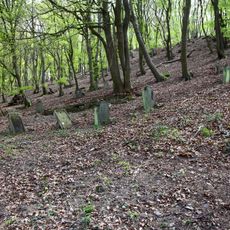
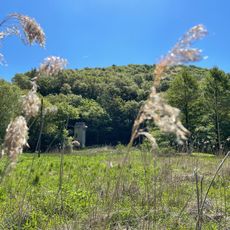
The hill lies between Brohl and Namedy, close to the Rhine valley and near Laacher See, roughly 10 km west of Neuwied. The summit rises about 94 m above the surrounding land, and the surrounding area is wooded. No eruption signs were observed as of May 2008.
The basalt from Hohe Buche was quarried in Roman times and the early Middle Ages and used as building material, including for the Roman bridge in Trier. The geologist Ulrich C. Schreiber made the volcano the subject of his novel Die Flucht der Ameisen, which describes a fictional eruption in the present day.
The community of curious travelers
AroundUs brings together thousands of curated places, local tips, and hidden gems, enriched daily by 93,855 contributors worldwide.