Gutshaus Parow, Manor house in Kramerhof, Germany.
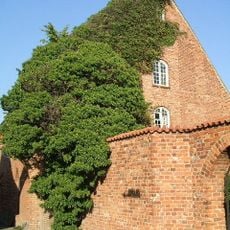
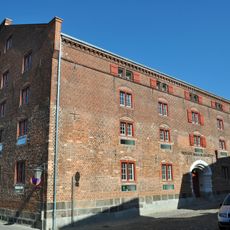
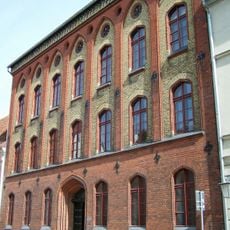
Gutshaus Parow is a two-storey, six-axis manor house built in 1860, partly rendered but dominated by a red brick facade. Its English country-house style shows volute and scrolled gables, oriels, decorative chimneys and dormer windows, with a small tower on the north side. Terracotta reliefs of family heads and partly damaged name plaques decorate the facade, and a neo-Gothic family chapel added in 1878 extends the south side.
Friedrich Franz von Langen, a Prussian embassy attaché in London, commissioned this manor house in 1860. The property remained in family hands until 1945, when postwar expropriations in East Germany transferred it away from its owners.
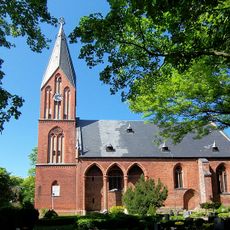
The family chapel added in 1878 in neo-Gothic style is now an outpost of the Kramerhof civil registry office, used for weddings and funerals. Its restoration from 2000 to November 2002 recovered the old brick floor, stucco friezes and ceiling ornaments. The estate's garden nursery, rebuilt in 2017 with €500,000 of LEADER funds, serves as a teaching and display garden.
The 2010 sale to a Rathenow company was reversed in 2015 after the planned holiday flats were never built; the municipality repaired the roof and roof structure and is seeking a new investor. The manor itself is not open to visitors, but the estate nursery, restored in 2017 with 500,000 euros of LEADER funding, is used as a teaching and display garden. The family chapel serves as a branch of the registry office.
Carl-Friedrich von Langen, an Olympic dressage champion, owned this estate before World War II expropriations took place. This connection to international equestrian sport adds a surprising competitive dimension to the property's story that often goes unnoticed by visitors.
The community of curious travelers
AroundUs brings together thousands of curated places, local tips, and hidden gems, enriched daily by 93,898 contributors worldwide.