Limeskastell Pohl, Roman fort reconstruction and open-air museum in Pohl, Rhineland-Palatinate, Germany.
Limeskastell Pohl is a full-scale reconstruction of a small Roman fort, built from 2009 to 2011 a short distance from the original site at the northeastern edge of Pohl. The timber-and-earth camp measures about 43 by 34 metres, with a palisade-topped rampart, a walkway behind it and a pointed ditch up to 2.35 metres deep. The interior is laid out as a U-shaped complex with a headquarters building and two soldiers' barracks.
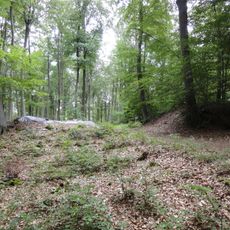
The small fort at Pohl was excavated by the Reichs-Limeskommission around 1900 under Robert Bodewig and Ernst Fabricius, who finally identified it. It guarded a point where the Limes turned about 75 degrees and a road from the Rhine valley met an old route to the Taunus. The fort itself is no longer visible; the full reconstruction was built nearby from 2009 to 2011.
The site is a speculative reconstruction, rebuilt from excavation plans between 2009 and 2011 and opened on 1 October 2011, slightly offset from the original fort. It was initiated by the Förderkreis Limeskastell Pohl, founded in June 2007, which now has over 270 members. The original fort lies at the northeastern edge of Pohl, where Schulstraße leaves the village toward Lollschied.
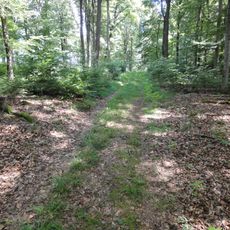
The site is easy to reach on foot and has flat paths for exploring the entire fort. Bring warm clothes as the wooden buildings are open and offer little shelter from bad weather.
The reconstruction stands slightly apart from the buried original, which lies at the northeastern edge of Pohl where Schulstraße leaves for Lollschied. The full-size copy was built from the excavation plans between September 2009 and May 2011 and opened on 1 October 2011, funded by a support association founded in June 2007 with over 270 members.
The community of curious travelers
AroundUs brings together thousands of curated places, local tips, and hidden gems, enriched daily by 94,085 contributors worldwide.