Sender Koblenz, Radio transmitter in Dieblich, Rhineland-Palatinate, Germany
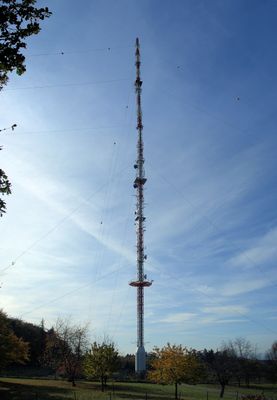
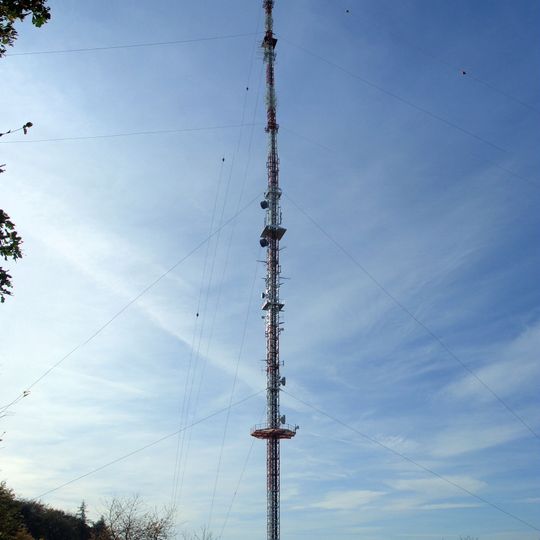
Sender Koblenz is a broadcasting facility of Südwestrundfunk for FM radio in the municipality of Dieblich, about 12 km southwest of Koblenz near the Naßheck hamlet and the A61 motorway. Its antenna support is a 280-metre guyed steel lattice mast with a 2×2 m cross-section and a weight of about 200 tonnes, built in 1964. It is the second-highest structure in Rhineland-Palatinate after the Eifel transmitter.
The 280-metre steel lattice mast was erected in 1964 and is the second-highest structure in Rhineland-Palatinate after the Eifel transmitter. In 1990 and 1991 the mast and foundations were reinforced, the guy ropes renewed and a new operations building added; the works uncovered a Celtic grave of about 500 BCE with a warrior and a chariot. Analogue television transmission ceased on 26 August 2008 during the DVB-T switchover, and TV broadcasting has since been handled by the Koblenz telecommunications tower.
The mast's name comes from the nearby hamlet of Naßheck, and the site sits by the A61 "Raststätte Mosel" rest stop. Its 1979 bombing, aimed at stopping the US film Holocaust, is counted among the first right-wing terrorist acts of post-war Germany; Peter Naumann served over four years in prison for it.
The station is located about 12 kilometers southwest of Koblenz near the Bundesautobahn 61 motorway. The remote location means visitors need a car to reach the site, and the facility itself is not open to the public.
During foundation reinforcement work in 1990, construction crews discovered a Celtic burial site dating to around 500 BCE beneath the facility. This finding reveals that the area held importance long before the modern broadcasting infrastructure was built.
The community of curious travelers
AroundUs brings together thousands of curated places, local tips, and hidden gems, enriched daily by 94,957 contributors worldwide.