Vierrademühle, Watermill in Neubrandenburg, Germany
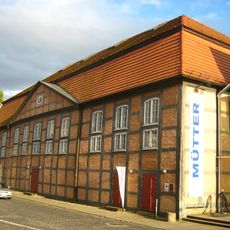
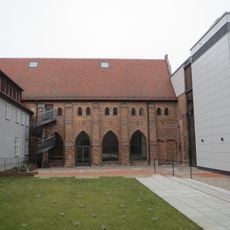
The Vierrademühle is a former watermill complex at Jahnstraße 3/3a by the Treptower Tor in Neubrandenburg. Its listed buildings now hold apartments, offices, shops, and cultural and dining spaces. The mill was first documented in 1271, when Bernhard von Raven dammed the Tollensesee outflow and dug an 860-metre channel to drive four undershot wheels.
The mill was first documented in 1271, built by Bernhard von Raven, son of Neubrandenburg's founder Herbord von Raven. To power it, the natural outflow of Tollensesee lake was dammed, raising the lake by about 80 cm, and an 860-metre upper channel drove four undershot water wheels. In 1360 the mill passed to Hermann von Aschen, and on 22 September 1433 Duke Heinrich IV of Mecklenburg ceded it to Broda Monastery. Around 1600 the town of Neubrandenburg acquired it and leased it out; during the Thirty Years' War it was destroyed, and between 1682 and 1684 the four undershot wheels were replaced by two overshot ones. In 1915 the mill switched to turbine operation, and milling ceased in 1998.
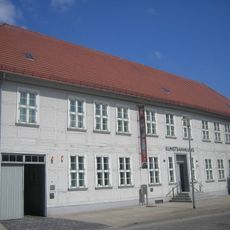
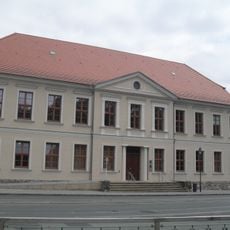
The building now houses the Regional Museum, with exhibitions that show how the mill shaped life in the city over centuries. Visitors can see displays that reveal the connection between this workplace and the community that depended on it.
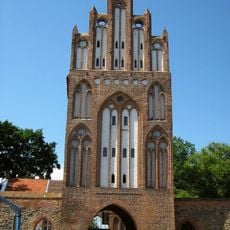
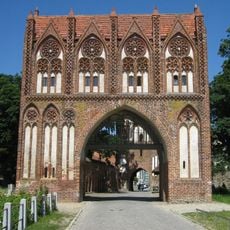
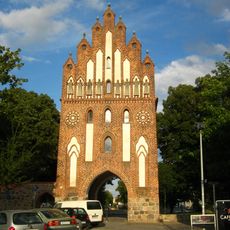
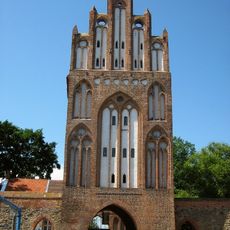
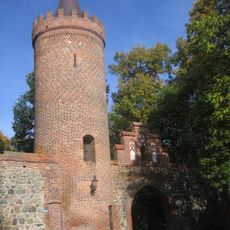
The building sits in a central location on a main road and is easy to find, with Treptower Gate nearby as a reference point. Visitors should note that it functions primarily as a museum today, so checking opening times before visiting is important.
The four undershot wheels that gave the mill its name were replaced between 1682 and 1684 by just two overshot wheels. The plant kept the name Vierrademühle regardless. Power changed again in 1915, when the mill switched to turbine operation, and from 1925 it ran on electricity.
The community of curious travelers
AroundUs brings together thousands of curated places, local tips, and hidden gems, enriched daily by 94,643 contributors worldwide.