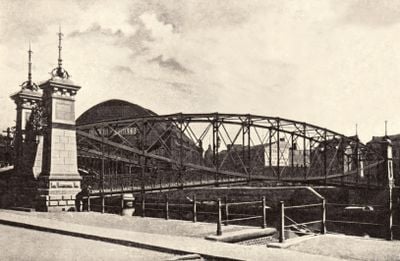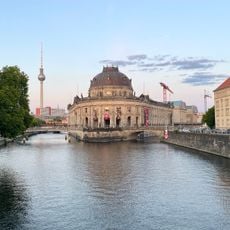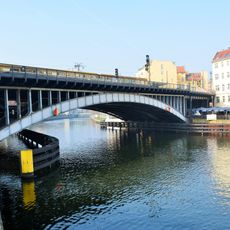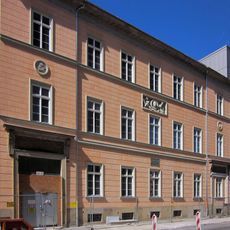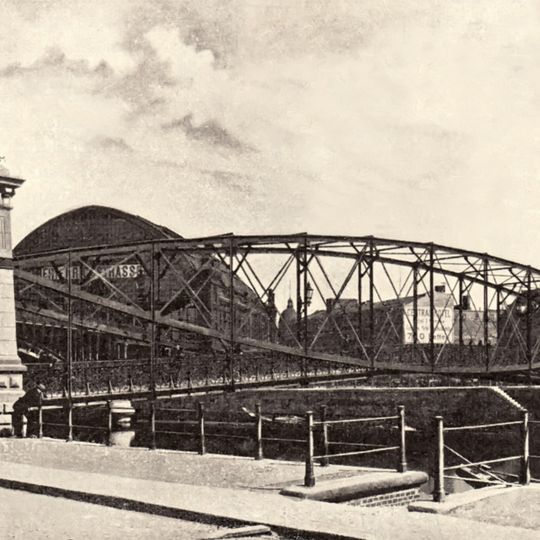
Schlütersteg, Steel footbridge in Berlin-Mitte, Germany.
Schlütersteg was a steel footbridge crossing the Spree River and connecting two residential areas with a direct route. The structure used a steel truss design and allowed pedestrians to walk across the river rather than taking longer detours around it.
The bridge was built around 1890 and connected the north bank of the river to the south bank in Berlin-Mitte. It was designed as a pedestrian bridge to serve the growing population of new residential neighborhoods in the area.
The bridge received its name from Andreas Schlüter, a prominent sculptor and architect who influenced the architectural landscape of Berlin during the Baroque period.
The bridge was easily accessible on foot and served as a shortcut between both riverbanks. Walking across the bridge was faster than taking a detour via other available bridges in the area.
The structure featured decorative metalwork in neo-baroque style adorning its railings and crown sections between portal-like pillars at both ends of the bridge.
The community of curious travelers
AroundUs brings together thousands of curated places, local tips, and hidden gems, enriched daily by 92,037 contributors worldwide.