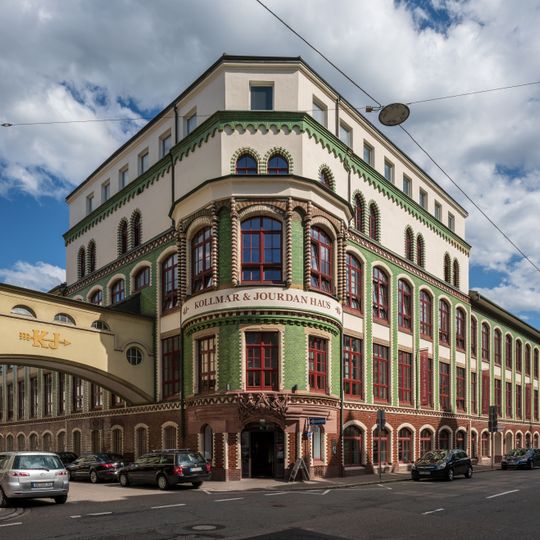
Kollmar & Jourdan House, Art Nouveau factory building in Pforzheim, Germany
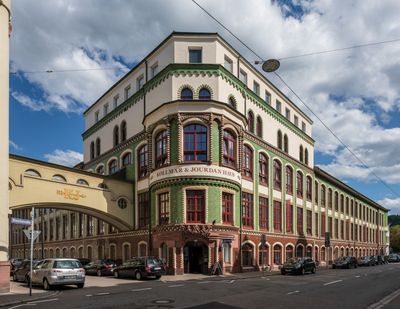
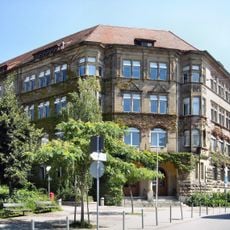
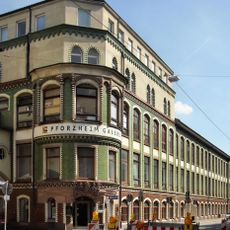
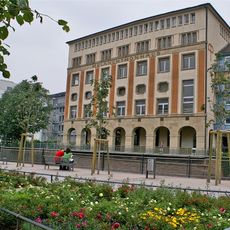
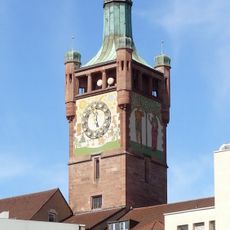
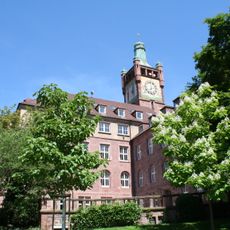
The Kollmar & Jourdan House is an Art Nouveau factory building in Pforzheim designed for jewelry and bijouterie production. Its facade features colored glazed bricks in light green, white, and brown tones arranged across multiple stories, creating a distinctive and harmonious appearance.
Architect Hermann Walder designed this manufacturing facility, which operated as a jewelry and bijouterie workshop from 1901 to 1977 on Bleichstraße. Following the factory's closure, different cultural and educational institutions took over the spaces.
Five ceramic medallions on the second floor balustrades display relief busts representing the continents of Africa, Australia, Europe, Asia, and America. These ornaments reflect how the company saw itself as connected to global trade and markets of that era.
The building now houses several institutions including a museum dedicated to the jewelry and watch industry, an art gallery, and an educational school. Visitors can explore the restored spaces and enjoy various exhibitions and learning programs.
The entrance doorway at Bleichstraße 81 merges Gothic design elements with the building's otherwise characteristic Art Nouveau style, creating an unexpected stylistic blend. This combination of different architectural approaches reflects the transitional periods in early 20th-century design thinking.
The community of curious travelers
AroundUs brings together thousands of curated places, local tips, and hidden gems, enriched daily by 60,000 contributors worldwide.