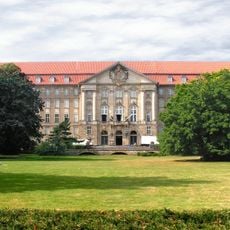
Königskolonnaden, Neoclassical colonnade in Heinrich-von-Kleist-Park, Berlin, Germany
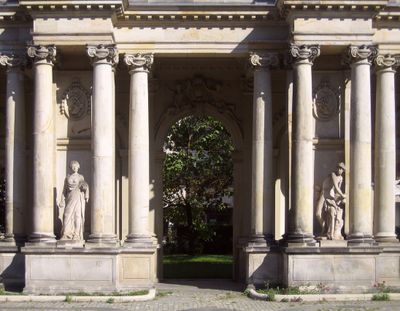
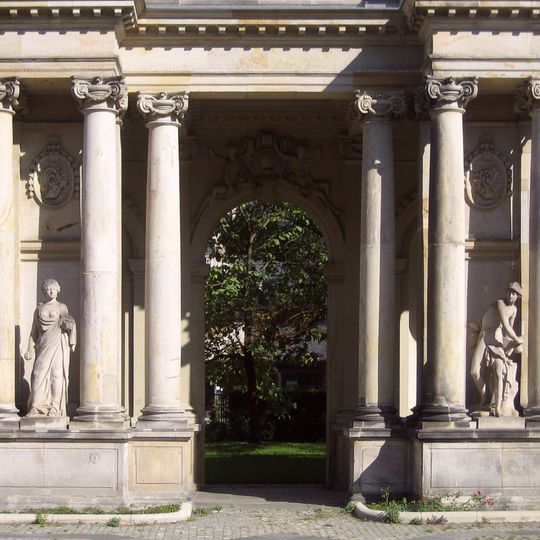
The Königskolonnaden is a neoclassical colonnade with paired Ionic columns made of sandstone, stretching approximately 50 meters across. It features detailed stone carvings and is topped with copper sheeting that has developed a green patina over time.
Built between 1777 and 1780 by architect Carl von Gontard, it originally stood near Königstrasse and Alexanderplatz in central Berlin. The entire structure was moved to its current location in the park in 1910 to make room for urban development.
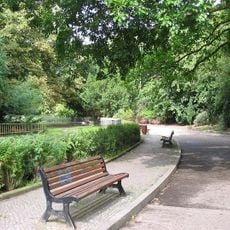
The colonnade's name reflects royal grandeur, though it now serves as a quiet passage through the park. You can observe how locals use the space, with people sitting beneath the columns or walking through to reach the park beyond.
You can reach it easily from Potsdamer Street, where it serves as a natural entry point to the park. The covered passageway offers shelter from rain and is accessible on foot from nearby streets.
The detailed stone figures of children were created by two brothers, Friedrich Elias Meyer II and Wilhelm Christian Meyer, who were prominent sculptors of their era. These details are easy to miss, but looking up reveals their exceptional craftsmanship and artistic skill.
The community of curious travelers
AroundUs brings together thousands of curated places, local tips, and hidden gems, enriched daily by 92,899 contributors worldwide.