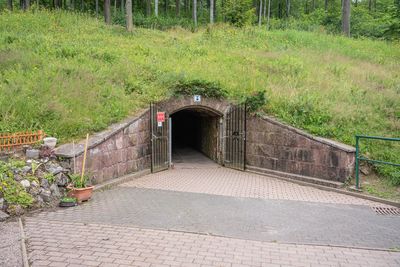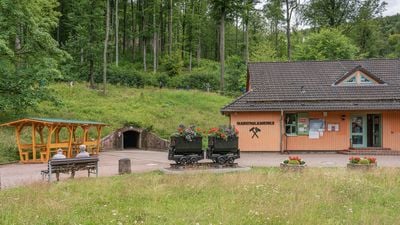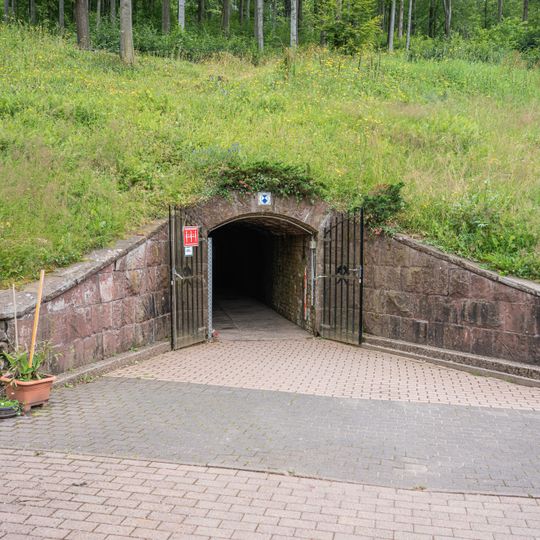
Marienglashöhle cave, Show cave and former mine in Friedrichroda, Germany.
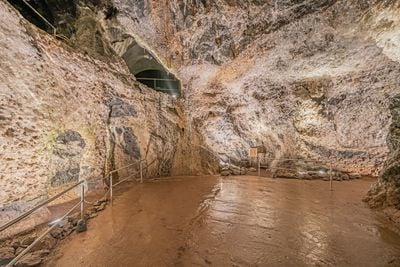
Marienglashöhle is a cave system in the Thuringian Forest that combines natural caverns with mining passages, all connected by passages containing sparkling crystal formations. The underground structure has multiple levels and tunnels that together create a network blending natural geology with historical extraction work.
Mining operations started in 1775 with copper exploration, but the discovery of gypsum deposits in 1778 shifted all efforts toward extracting this mineral instead. Work continued in this form until the early 1900s, when extraction ceased.
The name comes from the yellowish glass-like crystals that once seemed to glow like marbled stones to earlier observers. You can still see how these formations catch the light in the underground chambers, creating a sense of wonder as you walk through the passages.
The interior stays cool year-round at around 8 to 10 degrees Celsius, so bring warm clothing even in summer. Visits happen as guided tours lasting about 45 minutes, with walkways through the chambers that are reasonably safe, though sturdy shoes are recommended.
The crystal chamber spans about seven by ten meters and displays gypsum crystals that grow to 90 centimeters long, glimmering under the cave lighting. This underground mineral display is a highlight for many visitors who rarely encounter such large naturally formed crystals elsewhere.
The community of curious travelers
AroundUs brings together thousands of curated places, local tips, and hidden gems, enriched daily by 60,000 contributors worldwide.